A burning feeling after a late meal can be uncomfortable, but it is not always a reason for an invasive test. The question becomes more urgent when reflux changes how you eat, sleep, swallow, or maintain your weight. Understanding GERD symptoms requiring endoscopy can help you move from repeated self-treatment to an accurate diagnosis and a plan built around your health history.
When GERD Needs More Than Medication
Gastroesophageal reflux disease, or GERD, occurs when stomach contents flow back into the esophagus. Heartburn and regurgitation are common symptoms, and many people improve with lifestyle changes and acid-reducing medication. For uncomplicated reflux that responds to treatment, an upper endoscopy may not be the first step.
However, ongoing symptoms can sometimes reflect inflammation, narrowing of the esophagus, Barrett’s esophagus, a stomach condition, or a problem that is not actually caused by reflux. Endoscopy gives a gastroenterologist a direct view of the esophagus, stomach, and first part of the small intestine. It can identify visible damage, allow tissue sampling when needed, and guide treatment based on findings rather than assumptions.
The decision is individualized. Your age, symptoms, medication response, family history, tobacco use, weight history, and risk factors for Barrett’s esophagus all matter. A board-certified gastroenterologist can determine whether endoscopy is appropriate now, whether medication should be adjusted first, or whether another type of testing may better answer the clinical question.
GERD Symptoms Requiring Endoscopy Promptly
Certain symptoms are considered alarm features because they may signal complications or another condition that needs timely evaluation. If you have reflux along with any of the concerns below, contact a gastroenterology office promptly to discuss next steps.
- Trouble swallowing, the sensation that food sticks in your chest, or progressive difficulty swallowing solid foods and then liquids
- Pain with swallowing
- Vomiting blood, material that looks like coffee grounds, black or tar-like stools, or unexplained iron-deficiency anemia
- Unintentional weight loss, especially when paired with reduced appetite, early fullness, or swallowing changes
- Persistent vomiting, dehydration, or inability to keep food and liquids down
- Symptoms that continue despite a properly used course of prescription-strength acid suppression
These symptoms do not automatically mean a serious disease is present. They do mean it is not wise to keep guessing. For example, difficulty swallowing may occur because of inflammation or a benign narrowing caused by chronic acid exposure, but it can also require evaluation for conditions that need a different treatment approach.
Chest pain deserves special attention. Reflux can cause chest discomfort, but heart-related causes must be considered first, particularly if pain is new, severe, occurs with exertion, or comes with shortness of breath, sweating, dizziness, or pain spreading to the arm, jaw, or back. Seek emergency care for possible cardiac symptoms rather than assuming the cause is GERD.
Persistent Reflux Can Also Be a Reason to Investigate
Not every patient who needs endoscopy has an alarm symptom. Testing may be appropriate when heartburn, regurgitation, chronic cough, hoarseness, throat clearing, or nighttime reflux continues despite treatment. Before labeling symptoms as treatment-resistant, your physician will usually review how medication is being taken. Some acid-reducing medicines work best when taken before a meal, and timing can affect results.
A careful evaluation also looks at the possibility of non-GERD causes. Eosinophilic esophagitis, a condition involving immune-related inflammation of the esophagus, can resemble reflux and may cause swallowing problems. Functional heartburn can cause real and disruptive symptoms without visible acid injury. Motility disorders can affect swallowing and chest comfort. Endoscopy, biopsies, reflux monitoring, and esophageal motility testing each answer different questions, so the most useful test depends on the symptom pattern.
Endoscopy may also be recommended for patients with multiple risk factors for Barrett’s esophagus. Barrett’s occurs when long-term reflux is associated with changes in the lining of the lower esophagus. It does not cause distinct symptoms, which is why risk-based screening matters. Your specialist may consider factors such as chronic GERD, age, sex, family history, smoking history, and central obesity when discussing whether screening is appropriate.
What an Upper Endoscopy Can Show
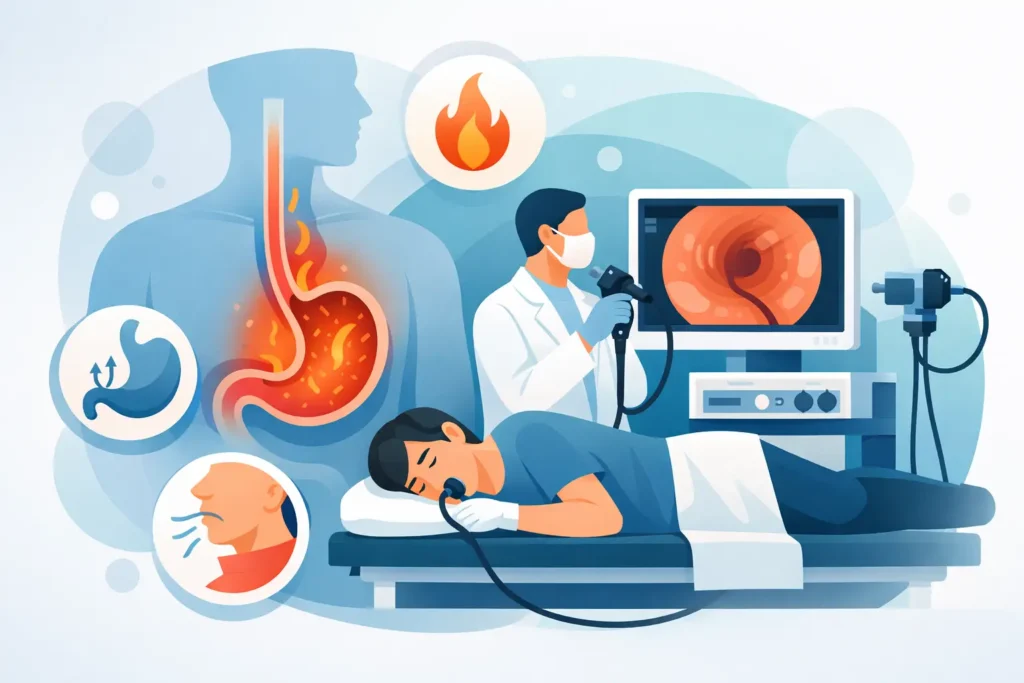
An upper endoscopy, also called an EGD, is a procedure in which a gastroenterologist passes a thin, flexible camera through the mouth to examine the upper digestive tract. It can help identify erosive esophagitis, ulcers, strictures, hiatal hernia, Barrett’s esophagus, and other conditions that may contribute to reflux-like symptoms.
During the procedure, the physician may take small tissue samples called biopsies. Biopsies are often collected even when the tissue looks normal because some conditions are diagnosed under a microscope. This is a standard part of thorough evaluation and is generally not felt by the patient.
In some cases, endoscopy can provide treatment as well as diagnosis. A narrowing in the esophagus may be dilated to improve swallowing. The results can also clarify whether ongoing medication, a change in treatment, surveillance for Barrett’s esophagus, or additional testing is the most appropriate next step.
What to Expect Before and After the Procedure
Upper endoscopy is commonly performed as an outpatient procedure with sedation. You will receive instructions about fasting, medications, diabetes management, blood thinners, and arranging for a responsible adult to drive you home. Following those instructions is essential for both safety and an effective examination.
The procedure itself is usually brief. Sedation helps patients remain comfortable, and most people have little memory of the exam. Mild throat soreness, bloating, or drowsiness can occur afterward and typically resolve quickly. Your physician may discuss initial visual findings the same day, while biopsy results generally take additional time.
Like any medical procedure, endoscopy has potential risks, including bleeding, reaction to sedation, or perforation, though serious complications are uncommon. The benefit of testing must be weighed against those risks. When symptoms suggest a complication, when reflux has not responded as expected, or when screening is clinically indicated, the information gained can be highly valuable.
Your Reflux History Shapes the Right Plan
GERD treatment is not limited to choosing between an antacid and an endoscopy. A productive consultation includes your symptom timing, trigger foods, meal schedule, sleep habits, current medications, prior test results, and personal goals. Weight changes can also influence reflux because increased abdominal pressure may worsen symptoms for some patients. For others, reflux persists regardless of weight, making direct evaluation particularly important.
A coordinated care approach can be helpful when digestive symptoms overlap with metabolic concerns, fatty liver disease, obesity, or medication-related digestive side effects. At NJ Gastroenterology & Health Wellness, board-certified specialists can evaluate reflux in the context of your broader digestive and metabolic health, then recommend a plan based on evidence and your individual needs.
If your reflux has become more frequent, more disruptive, or harder to explain, schedule a gastroenterology consultation rather than simply increasing over-the-counter medication on your own. A clear diagnosis can protect your esophagus, reduce uncertainty, and give you a practical path toward feeling comfortable eating, sleeping, and living again.