A Barrett’s esophagus surveillance schedule is not a one-size-fits-all calendar. The timing of your next upper endoscopy depends on the length of the Barrett’s segment, whether biopsies show cell changes called dysplasia, your prior treatment, and the quality of your reflux control. The goal is straightforward: monitor the esophageal lining closely enough to find concerning changes early, without asking you to undergo procedures more often than necessary.
Barrett’s esophagus develops when long-term acid reflux damages the lower esophagus and the lining changes to resemble intestinal tissue. Most people with Barrett’s esophagus will not develop esophageal cancer. Still, regular surveillance provides an evidence-based way to identify precancerous changes at a stage when treatment can be highly effective.
Why surveillance matters
Barrett’s esophagus itself often does not cause new or distinctive symptoms. In fact, you may feel well even if microscopic changes are developing in the tissue. Heartburn severity also does not reliably tell us whether Barrett’s is progressing. That is why surveillance is based on direct visualization and biopsy results rather than symptoms alone.
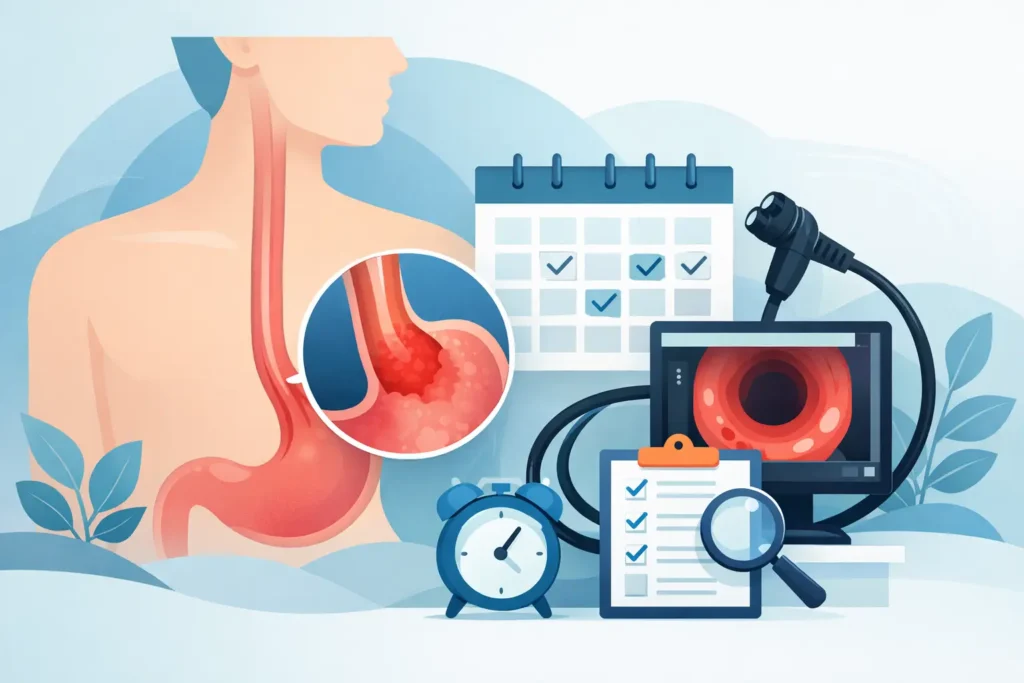
During an upper endoscopy, a gastroenterologist examines the esophagus using a thin, flexible camera while you are sedated for comfort. The physician documents the extent of Barrett’s tissue, checks for visible abnormalities, and takes carefully mapped biopsies. A pathologist then examines those samples for dysplasia, which means abnormal cell changes that may raise the risk of progression.
The value of surveillance is not simply repeating a procedure on a schedule. It is creating a clinical record over time. Comparing each examination with prior endoscopy findings and pathology helps your care team make decisions based on the most accurate picture of your individual risk.
Barrett’s esophagus surveillance schedule by biopsy result
Current U.S. recommendations generally use the biopsy category as the main guide. Your physician may adjust the interval for factors such as the length of Barrett’s tissue, the quality of the exam, prior pathology findings, and your overall health.
Barrett’s esophagus without dysplasia
If biopsies show Barrett’s esophagus without dysplasia, surveillance is commonly recommended every three to five years. A shorter interval is often used when the Barrett’s segment is 3 centimeters or longer, while shorter segments may be monitored at the longer end of that range.
This interval may sound long, but it reflects the relatively low annual risk of cancer progression for patients without dysplasia. More frequent endoscopy does not always add meaningful protection in this group. Consistent surveillance at the right interval, paired with reflux management and attention to new symptoms, is the more useful approach.
Indefinite for dysplasia
Sometimes inflammation makes it difficult for a pathologist to determine whether true dysplasia is present. This is called indefinite for dysplasia. It does not mean cancer has been found. It means the tissue needs a closer look after inflammation has been better controlled.
In this situation, your gastroenterologist may recommend optimizing acid-suppressing treatment, often with a proton pump inhibitor, and repeating endoscopy with biopsies in about six months. If the repeat biopsies no longer show concern for dysplasia, the plan may return to a nondysplastic surveillance interval. If indefinite findings persist, annual surveillance is often considered.
Low-grade dysplasia
Low-grade dysplasia means early abnormal cell changes are present. Because this diagnosis affects treatment decisions, pathology review by an expert gastrointestinal pathologist is especially valuable. Inflammation and sample interpretation can sometimes make a meaningful difference in whether dysplasia is confirmed.
For confirmed low-grade dysplasia, endoscopic eradication therapy is often recommended to remove or destroy the at-risk Barrett’s tissue. Depending on your situation and preferences, careful surveillance may also be an option. When surveillance is selected, endoscopy is commonly performed at six months, again at 12 months, and then yearly if dysplasia does not progress.
This is a decision that deserves a thoughtful discussion. Endoscopic treatment can reduce the risk of progression, but it involves multiple procedures and follow-up. Surveillance avoids immediate treatment but requires strict adherence to a closer schedule.
High-grade dysplasia or early cancer
High-grade dysplasia is a more advanced precancerous change and requires prompt evaluation by a specialist experienced in Barrett’s endoscopic therapy. It is generally treated rather than watched with surveillance alone.
Treatment may include endoscopic mucosal resection to remove a visible abnormal area, followed by ablation to eliminate remaining Barrett’s tissue. These advanced endoscopic approaches can often treat early disease without major surgery when it is detected at an appropriate stage. Follow-up endoscopies remain essential after treatment because Barrett’s tissue can recur.
What happens after Barrett’s treatment?
A successful ablation result does not mean follow-up ends. Even after complete eradication of intestinal metaplasia, patients need a personalized surveillance plan. The timing depends largely on whether treatment was performed for low-grade dysplasia, high-grade dysplasia, or early cancer.
Follow-up is usually more frequent in the first year after treatment and may become less frequent over time if the esophagus remains clear. Your physician will also continue to manage reflux, since ongoing acid exposure can contribute to recurrence. Taking prescribed medication as directed and attending scheduled examinations are both part of protecting the result achieved through treatment.
What can change your surveillance timing?
Your schedule should be based on your actual medical record, not a general online chart. Several factors can influence the plan:
- The length of the Barrett’s segment and whether it has changed over time
- The presence, grade, or persistence of dysplasia on biopsy
- Whether biopsies were affected by active inflammation
- A prior history of ablation, tissue resection, or other Barrett’s treatment
- New symptoms such as progressive trouble swallowing, unexplained weight loss, vomiting blood, black stools, or persistent chest discomfort
New alarm symptoms should not wait for your routine surveillance date. Contact a medical professional promptly if they occur. These symptoms can have many causes, but they warrant timely evaluation.
Reflux treatment still has a role
Surveillance detects tissue changes, but it does not replace reflux treatment. For many patients with Barrett’s esophagus, a proton pump inhibitor is prescribed to reduce acid exposure and help heal esophageal inflammation. Your physician may also discuss practical measures such as avoiding meals close to bedtime, identifying trigger foods that consistently worsen symptoms, limiting tobacco exposure, and working toward a medically appropriate weight.
Weight management can be particularly relevant for patients whose reflux is associated with abdominal pressure, obesity, fatty liver disease, or metabolic concerns. The right plan is not a generic diet or a quick fix. It should account for your digestive symptoms, medications, nutrition needs, and long-term health goals.
Preparing for your surveillance endoscopy
Before an upper endoscopy, your care team will give you specific fasting and medication instructions. Be sure to mention blood thinners, diabetes medications, injectable weight-loss medications, sleep apnea, heart or lung conditions, allergies, and any prior difficulty with sedation. These details help the team plan a safe and comfortable procedure.
After the exam, you may receive preliminary findings the same day, but biopsy results take longer. Those pathology results are what confirm the next step in your Barrett’s esophagus surveillance schedule. Keep a copy of prior endoscopy and pathology reports when possible, especially if you are transferring care or seeking a second opinion.
A surveillance plan should feel clear, not confusing
If you have been told you have Barrett’s esophagus, ask your gastroenterologist three practical questions: What did my biopsies show? When is my next endoscopy due? What would make that timeline change? Clear answers can replace uncertainty with a plan you can follow.
At NJ Gastroenterology & Health Wellness, board-certified gastroenterology care focuses on precise diagnosis, advanced endoscopic evaluation, and a follow-up plan built around your history and pathology. Staying on schedule is one of the most practical steps you can take to protect your esophageal health, and your care team should make that next step easy to understand.