A feeling that food is sticking, painful swallowing, persistent heartburn, or unexplained regurgitation can make every meal feel uncertain. When discussing endoscopy versus barium swallow, the central question is not which test is universally better. It is which test gives your physician the clearest, safest answer based on your symptoms, medical history, and the concern being evaluated.
Both tests examine the upper digestive tract, particularly the esophagus. But they do so in very different ways. A barium swallow shows how liquid and swallowed material move through the esophagus in real time. An upper endoscopy allows a gastroenterologist to look directly at the lining of the esophagus, stomach, and first part of the small intestine, take biopsies, and often treat certain findings during the same procedure.
Endoscopy versus barium swallow: the key difference
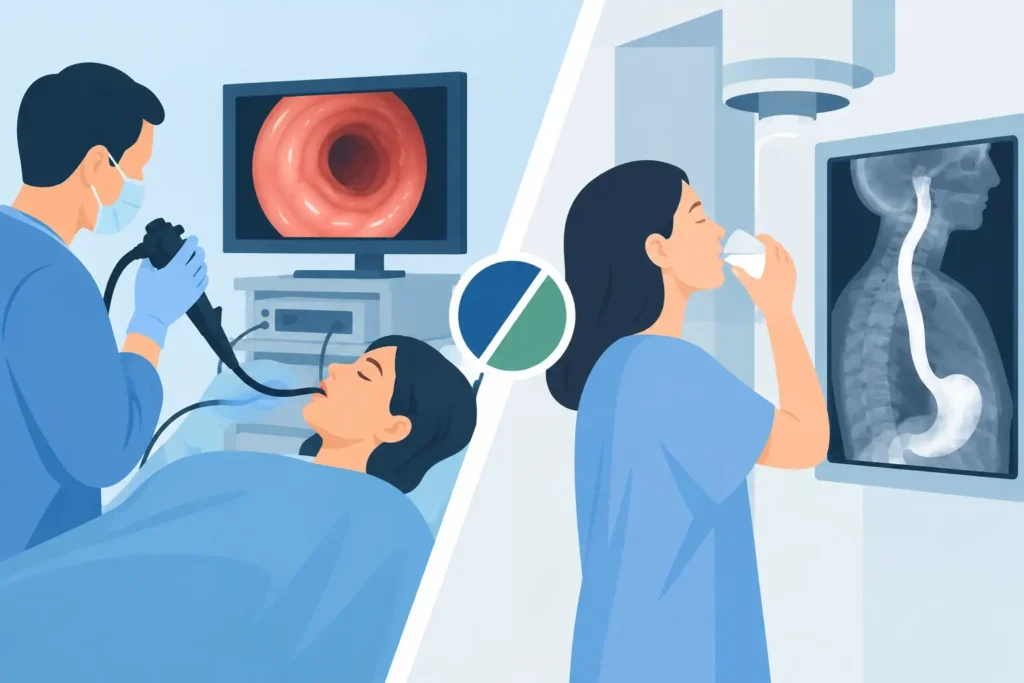
A barium swallow, also called an esophagram, is an imaging study performed with X-ray technology. You drink a chalky liquid containing barium, which coats the inside of your esophagus and makes its shape and movement visible on X-ray images. The radiologist can assess narrowing, structural changes, swallowing mechanics, and whether material is moving normally toward the stomach.
An upper endoscopy, often called EGD or esophagogastroduodenoscopy, is performed by a gastroenterologist. A thin, flexible camera passes gently through the mouth and into the upper digestive tract while you are sedated. This gives your physician a close view of the tissue itself, including subtle inflammation, ulcers, rings, abnormal growths, and changes related to chronic acid reflux.
The practical difference is significant: a barium swallow is primarily a diagnostic imaging test, while endoscopy is both diagnostic and potentially therapeutic. If a physician sees an esophageal stricture during endoscopy, for example, they may be able to dilate it during the same visit. If tissue appears inflamed or abnormal, biopsies can be collected right away.
When a barium swallow may be the right first test
A barium swallow can be especially useful when the concern involves the movement or shape of the esophagus. It may help identify a narrowing, a large hiatal hernia, a diverticulum, or a swallowing disorder such as achalasia. It can also show whether a tablet or food-like material appears to get held up at a particular point.
This study may be recommended when a patient describes difficulty swallowing that seems to occur high in the throat or when symptoms suggest a problem with coordination during swallowing. In some cases, a modified barium swallow is performed with speech-language pathology to evaluate the mouth and throat phase of swallowing and assess aspiration risk.
A barium swallow does not require sedation or a scope. For some patients, that makes it feel more approachable. The test is usually brief, and patients are generally able to return to their routine shortly afterward. Your care team will provide specific preparation instructions, which may include fasting beforehand.
However, barium imaging has important limits. It cannot reliably identify every cause of reflux, inflammation, or early tissue change. It also cannot obtain biopsies. A normal study does not always rule out conditions such as eosinophilic esophagitis, Barrett’s esophagus, or microscopic inflammation that may need direct tissue evaluation.
When upper endoscopy is often preferred
Upper endoscopy is commonly recommended for persistent or concerning upper GI symptoms because it provides direct visualization and tissue sampling. It can help evaluate ongoing reflux, chest discomfort that may be related to the esophagus, nausea, vomiting, upper abdominal pain, unexplained anemia, and trouble swallowing.
Endoscopy is particularly valuable when symptoms may reflect a condition that requires a biopsy for diagnosis. Eosinophilic esophagitis, for example, can cause food to stick and may not be confirmed by appearance alone. Biopsies may also be needed to evaluate suspected Barrett’s esophagus, infection, celiac disease, gastritis, ulcers, or other upper digestive conditions.
Your gastroenterologist may also recommend endoscopy promptly if you have alarm symptoms. These can include progressive difficulty swallowing, food getting stuck, painful swallowing, vomiting blood, black stools, unintentional weight loss, persistent vomiting, or iron-deficiency anemia. These symptoms do not automatically mean a serious disease is present, but they deserve timely medical evaluation rather than prolonged self-treatment.
Because sedation is typically used, endoscopy requires more preparation than a barium swallow. You will need to fast for a period before the procedure and arrange for a responsible adult to take you home. Most patients do not remember the procedure and can return to usual activities the next day, though your team will give you personalized instructions.
What each test can and cannot show
A barium swallow is strong at showing anatomy and function. It can reveal how the esophagus opens, narrows, or contracts as you swallow. It may show a stricture, esophageal ring, hiatal hernia, or abnormal motility pattern. It is often helpful for planning the next step when swallowing symptoms are present.
Endoscopy is stronger for evaluating the lining of the digestive tract and obtaining pathology. It can identify erosive esophagitis from GERD, ulcers, suspicious lesions, Barrett’s-related changes, and other tissue abnormalities. It also allows treatment, including dilation of certain narrow areas and removal or sampling of some lesions.
Neither test answers every question. A barium swallow may show an abnormal motility pattern, but additional testing such as esophageal manometry may be needed to measure muscle function precisely. Endoscopy may look normal in a patient with reflux symptoms, and ambulatory pH monitoring may then help determine whether acid or non-acid reflux is contributing.
This is why the best diagnostic plan is often staged. One test may guide the need for another, rather than replacing it entirely.
Safety and comfort considerations
Both tests are widely used and generally safe when performed for the right reason. With a barium swallow, the most common short-term issue is constipation from the barium. Drinking fluids afterward can help, unless your medical team gives different guidance. Because the study uses X-rays, radiation exposure is considered when determining whether the test is appropriate.
Upper endoscopy has a low complication rate, but it is an invasive procedure. Potential risks include medication reactions, bleeding after certain treatments or biopsies, and rarely a tear in the digestive tract. Your gastroenterologist will review the benefits, risks, and alternatives with you before the procedure, especially if you take blood thinners, have heart or lung conditions, are pregnant, or have had prior difficulty with sedation.
Comfort matters as well. Some patients prefer an initial imaging test because it avoids sedation. Others prefer endoscopy because it may provide a more definitive answer and allow treatment without separate appointments. There is no one-size-fits-all choice.
How your physician decides which test you need
The decision begins with your story. Your physician will want to know whether solids, liquids, or both are difficult to swallow; whether symptoms are occasional or worsening; whether reflux medicines help; and whether you have experienced weight loss, anemia, or food impaction. Previous test results, medications, family history, and conditions such as diabetes or autoimmune disease can also shape the evaluation.
For classic reflux without warning signs, lifestyle changes and medication may be appropriate before testing. For ongoing symptoms despite treatment, frequent regurgitation, new swallowing difficulty, or concern for complications of GERD, endoscopy may be the more direct next step. When the symptom pattern points toward a structural or swallowing-motion issue, a barium swallow may provide valuable information first.
At NJ Gastroenterology & Health Wellness, board-certified gastroenterology care is built around that individualized decision-making. Rather than ordering tests in isolation, the goal is to connect your symptoms, medical history, diagnostic findings, and treatment options into a clear plan.
Questions to bring to your appointment
If your physician recommends either study, ask what question the test is intended to answer and whether it can change treatment. It is also reasonable to ask how to prepare, whether you need to adjust medications, how soon results will be available, and whether another test may be needed afterward.
Persistent swallowing problems and reflux deserve more than guesswork. A thoughtful evaluation can identify treatable causes, help prevent complications, and give you a practical path back to eating and living with greater comfort.