
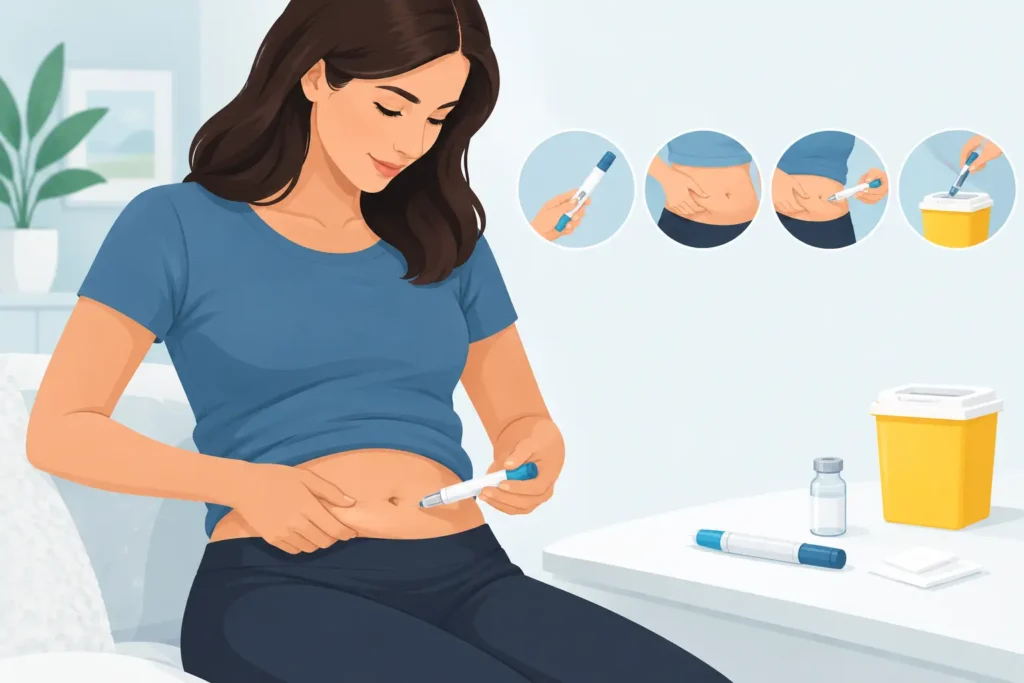
A semaglutide injection takes only a few moments, but correct technique protects your comfort, helps you receive the prescribed dose, and reduces avoidable problems. If you are learning how to inject semaglutide, your physician or a trained clinical team should demonstrate your specific pen or vial before your first dose. Device instructions can differ, particularly between branded pens and medications prepared by a pharmacy.
Semaglutide is a prescription GLP-1 medication used for certain patients with type 2 diabetes or chronic weight management. It is not a one-size-fits-all treatment. At NJ Gastroenterology & Health Wellness, medication decisions are made within a broader assessment of weight history, metabolic health, digestive symptoms, liver health, lifestyle, and treatment goals. The injection is one part of a physician-guided plan, not a replacement for ongoing clinical care.
How to Inject Semaglutide: The Safe Basics
Semaglutide is injected into the fatty tissue just under the skin, called a subcutaneous injection. It is not injected into a muscle or vein. Most patients take it once weekly on the same day each week, with or without food, but your prescription label and care plan determine the exact schedule and dose.
Before injecting, choose a time when you can work carefully without feeling rushed. Keep your medication, supplies, and sharps container in a clean, well-lit area. Never share a pen or needle with another person, even if the needle has been changed. Sharing can transmit infection.
Your medication should be clear and colorless unless your pharmacist or prescribing team has told you otherwise. Do not use a pen or vial that is expired, damaged, frozen, cloudy, discolored, or contains particles. Contact your pharmacy or care team for guidance rather than attempting to use questionable medication.
Choose and Rotate Your Injection Site
The abdomen, front of the thighs, and upper arms are common injection areas. For the abdomen, stay at least two inches away from the belly button. Choose skin that is healthy and intact, avoiding bruises, scars, stretch marks, rashes, tenderness, or areas that feel hard.
Rotate your site each week. You may use the same general body area, such as the abdomen, but inject at least an inch away from the prior spot. Rotation reduces irritation and helps protect the skin over time. If an area is sore after an injection, select a different site for your next dose.
Prepare the Pen or Syringe as Directed
Wash your hands thoroughly with soap and water. Clean the selected injection site with an alcohol swab and allow it to air-dry. Injecting through wet alcohol can sting.
If you use a prefilled pen, follow the exact instructions supplied with that pen. Some pens require a new pen needle for every injection and a flow check before the first use of each new pen. Others are single-use or have a different preparation process. Do not guess based on a friend’s device or an online video.
If your prescription comes in a vial and syringe, use only the syringe and needle type provided or specifically recommended by your pharmacy or prescribing clinician. The marked units on a syringe are not interchangeable with milligrams. This is especially important when a medication is prepared in a pharmacy. Confirm the precise amount to draw up before you leave the pharmacy or during your clinical teaching visit. If the label is unclear, pause and call your care team.
Giving the Injection
Once the skin is clean and dry, gently hold the pen or syringe as you were taught. Insert the needle straight into the fatty tissue at the angle directed for your device. With many pen devices, this is a 90-degree angle. Press the injection button or plunger slowly and completely.
For a pen, keep the needle in the skin for the full number of seconds specified in the product instructions after the dose counter returns to zero. Removing it too soon can result in an incomplete dose. You should not see a large amount of medication on the skin afterward. A tiny drop at the needle tip may occur and is usually not a concern.
Remove the needle straight out. You may apply gentle pressure with a clean cotton ball or gauze if there is minor bleeding, but do not rub the site. Do not reuse a needle. Carefully place used needles, syringes, and pen needles into an FDA-cleared sharps disposal container or a heavy-duty household container that can be closed securely, according to local disposal guidance.
A small drop of blood, brief stinging, or mild redness can happen. Persistent pain, significant swelling, warmth, drainage, or a spreading rash deserves a call to your clinician.
Store Semaglutide Correctly
Storage instructions vary by product and whether a pen has already been used. Many semaglutide pens are refrigerated before first use and may have specific room-temperature allowances afterward. Some products must be protected from light, and none should be frozen or stored directly against a refrigerator cooling element.
Read the pharmacy label and the medication instructions every time you receive a refill. Keep the medication away from children and pets. Avoid leaving it in a hot car, near direct sunlight, or in a bathroom where heat and humidity fluctuate. If you believe the medication was frozen, overheated, or stored outside the recommended timeframe, do not inject it until your pharmacist or prescribing team advises you.
What to Do if You Miss a Dose
Do not double a dose to make up for a missed injection. The right next step depends on how long it has been since your scheduled dose and which semaglutide product you use. Product-specific rules can differ.
Call your prescribing office or pharmacist if you are uncertain. If you need to change your weekly injection day, ask for guidance on appropriate spacing between doses. A simple calendar reminder, phone alarm, or note in your medication tracker can help you stay consistent without taking medication too close together.
Managing Common Side Effects
Nausea, reduced appetite, constipation, diarrhea, indigestion, and abdominal discomfort are among the more common side effects, especially when starting treatment or increasing a dose. Your care team may start low and adjust gradually to give your body time to adapt.
Smaller meals, slower eating, adequate fluids, and limiting high-fat or very large meals can help some patients feel better. For patients with reflux, IBS, fatty liver disease, or other digestive concerns, symptom management should be individualized. Tell your physician about changes in bowel habits, reflux, abdominal pain, or difficulty tolerating food rather than assuming discomfort is something you simply need to endure.
Seek urgent medical attention for severe or persistent abdominal pain, especially pain that may spread to the back, repeated vomiting, signs of dehydration, swelling of the face or throat, trouble breathing, or symptoms of a serious allergic reaction. Contact your prescribing clinician promptly for persistent vomiting or diarrhea, inability to keep fluids down, severe constipation, or symptoms that are worsening rather than improving.
When to Contact Your Semaglutide Care Team
Call before taking your next dose if you are unsure how much medication you injected, accidentally used the wrong amount, or have concerns about a pen, needle, vial, or storage issue. It is far safer to ask than to make a second injection based on uncertainty.
Your physician also needs to know about new medications, planned procedures, pregnancy or plans for pregnancy, and major changes in your health. Semaglutide may not be appropriate for everyone, including people with certain personal or family thyroid cancer histories or specific endocrine conditions. A thorough medical review is the right place to address those questions.
Learning the injection technique can feel intimidating at first, but it quickly becomes a manageable weekly routine with the right instruction. A clinician-led plan gives you more than a prescription: it gives you a clear process for safe dosing, digestive symptom support, and progress that is measured against your long-term health goals.