Nighttime reflux can turn a normal bedtime routine into hours of burning discomfort, coughing, throat irritation, or a sour taste that wakes you from sleep. The best reflux sleeping positions use gravity and your anatomy to reduce the chance that stomach contents travel upward into the esophagus. For many people, a few changes to sleep position and bedtime habits can make a meaningful difference.
However, frequent nighttime symptoms are not something you should simply work around forever. Ongoing reflux can affect sleep quality and may signal gastroesophageal reflux disease, or GERD, which deserves an individualized medical evaluation.
Why reflux often gets worse at night
Reflux occurs when stomach acid and other stomach contents move backward into the esophagus, the tube connecting the mouth to the stomach. During the day, staying upright allows gravity to help keep those contents in the stomach. Swallowing also helps clear the esophagus.
When you lie down, gravity no longer provides the same support. A late or large meal, alcohol, certain medications, excess abdominal pressure, a hiatal hernia, or a weakened lower esophageal sphincter can make symptoms more likely. Some people mainly notice classic heartburn, while others experience chronic cough, hoarseness, a lump-in-the-throat sensation, chest discomfort, or disrupted sleep.
The best reflux sleeping positions
Sleep on your left side
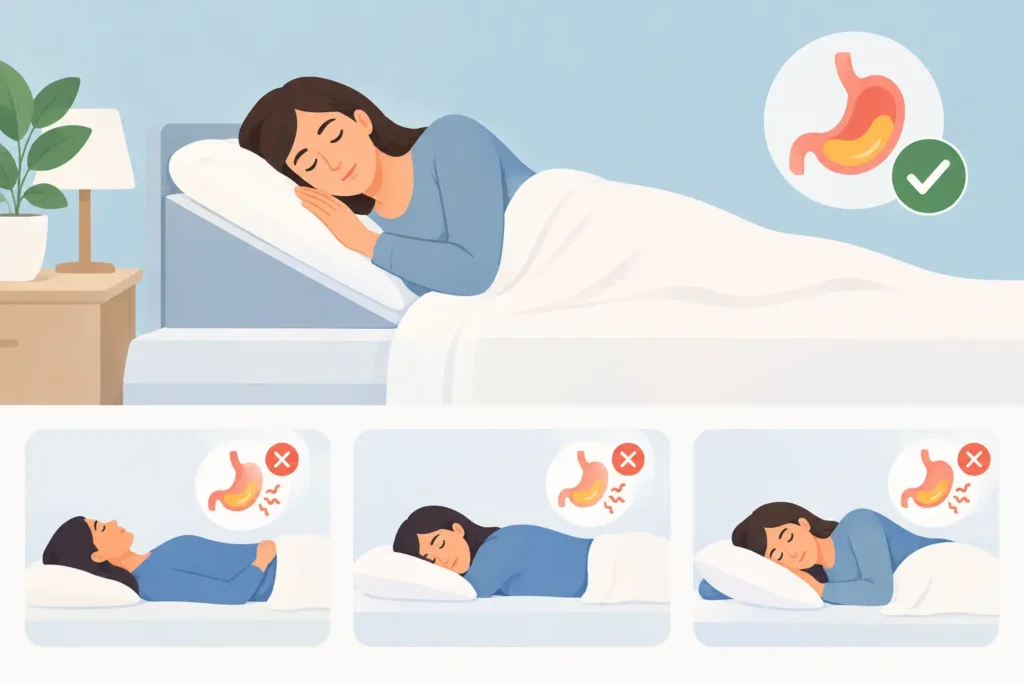
For many adults with nighttime reflux, left-side sleeping is the most helpful position. The stomach sits primarily on the left side of the upper abdomen. When you lie on your left, the connection between the stomach and esophagus is positioned in a way that may make it harder for acid to flow upward.
This position can be especially useful if reflux occurs after you first fall asleep or wakes you in the middle of the night. Place a pillow between your knees or use a body pillow if you need added support for your hips, shoulders, or back. Comfort matters because the position only helps if you can maintain it through the night.
Elevate your upper body, not just your head
Raising the upper body is another effective approach, particularly for people with frequent GERD symptoms. The goal is to create a gradual incline from the torso upward so gravity can help keep stomach contents where they belong.
A foam wedge pillow or raising the head of the bed by about 6 to 8 inches can provide this incline. Simply stacking several standard pillows under your head is usually less effective. It may bend your neck and upper body forward, increase pressure on the abdomen, and leave you sliding out of position overnight.
An adjustable bed can also be a practical option for some patients, especially those who have reflux along with mobility limitations, back pain, or other conditions that make a wedge pillow uncomfortable.
Combine left-side sleeping with elevation
For persistent nighttime reflux, the combination of left-side sleeping and upper-body elevation is often worth trying. This may provide more relief than either strategy alone, especially after an evening meal or during periods when symptoms are more active.
There is no single setup that works for every body type or sleep preference. Experiment with pillow height, wedge angle, and side-support pillows until you find a position that is both comfortable and sustainable.
Positions that may make reflux worse
Sleeping flat on your back can allow reflux to remain in contact with the esophagus longer, particularly after eating. Some people can tolerate back sleeping when the upper body is elevated, but flat back sleeping is often not the best choice for active nighttime symptoms.
Right-side sleeping may also worsen reflux for some people. In that position, the stomach may sit above the lower esophagus in a way that makes backflow easier. If you consistently wake with burning or regurgitation after sleeping on your right side, try switching to your left and monitor whether your symptoms improve.
Sleeping on your stomach may reduce symptoms for a few people, but it is not generally a practical first-line solution. It can strain the neck and lower back, and it is difficult to maintain comfortably for a full night. The best position is one that supports reflux control without creating new pain or interfering with restorative sleep.
Make your sleep position work better
Sleep positioning works best alongside a few targeted evening habits. If reflux follows a predictable pattern, consider what happens in the two to three hours before bed. Late meals are a common trigger because lying down soon after eating gives the stomach less time to empty.
Try finishing dinner at least three hours before lying down when possible. If you need an evening snack, choose a smaller portion and avoid foods that reliably trigger your symptoms. Triggers vary from person to person, but common examples include high-fat meals, chocolate, peppermint, tomato-based foods, citrus, coffee, carbonated drinks, and alcohol.
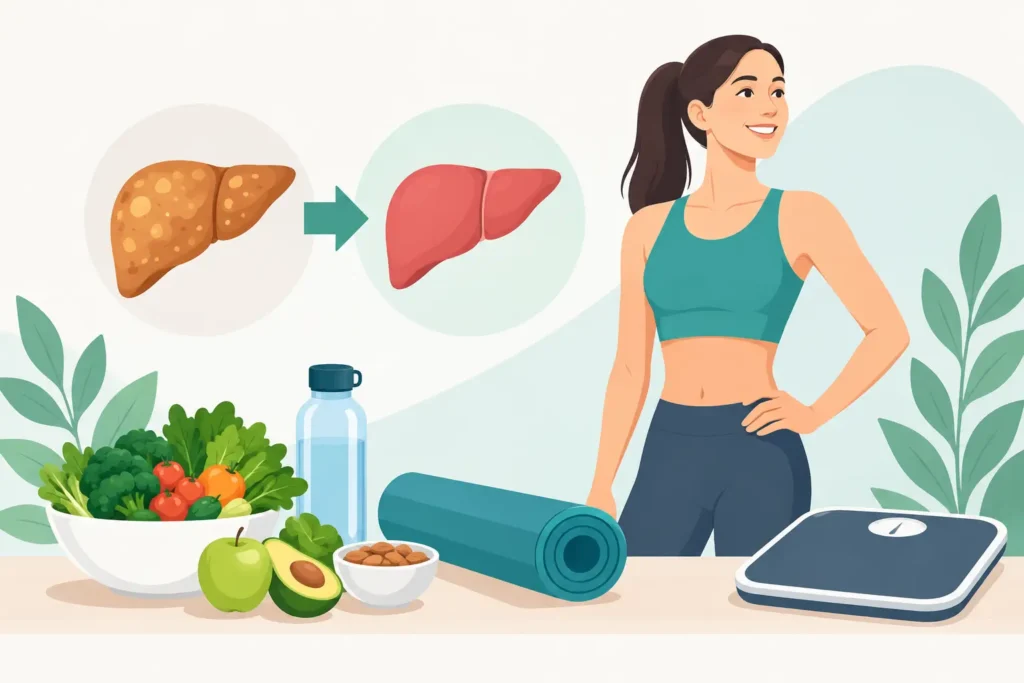
Clothing can also matter. Tight waistbands or shapewear may increase abdominal pressure after a meal. For patients who carry excess weight around the abdomen, physician-guided weight management can reduce reflux symptoms while also supporting metabolic and liver health. The right approach depends on your health history, medications, and overall goals.
If you use an over-the-counter antacid, H2 blocker, or acid-reducing medication, follow the label and discuss frequent use with a clinician. These medications can help some patients, but they do not replace an accurate diagnosis when symptoms are ongoing.
When nighttime reflux needs medical attention
Occasional heartburn after a heavy meal is common. Reflux that occurs more than twice a week, repeatedly interrupts sleep, or continues despite lifestyle changes should be evaluated. A gastroenterologist can determine whether your symptoms are related to GERD or another condition and recommend the appropriate next steps.
Seek prompt medical care for trouble swallowing, painful swallowing, vomiting, unexplained weight loss, black stools, vomiting blood, persistent nausea, or symptoms of anemia. New or severe chest pain should be treated as urgent, especially if it occurs with shortness of breath, sweating, dizziness, or pain spreading to the arm, jaw, or back. Heartburn and heart-related chest pain can feel similar, so it is safer not to self-diagnose.
A specialist may recommend medication, lifestyle changes, upper endoscopy, reflux testing, or additional evaluation based on your symptoms and risk factors. Upper endoscopy can help assess the esophagus and stomach for inflammation, narrowing, ulcers, Barrett’s esophagus, or other concerns. Not every patient needs testing, but persistent symptoms deserve a plan based on more than trial and error.
A more comfortable night starts with a clear plan
Start with left-side sleeping and an elevated upper body for one to two weeks, while avoiding meals close to bedtime. Keep track of when symptoms occur, what you ate, and whether reflux wakes you from sleep. That information can make a medical consultation more productive.
If nighttime reflux continues to affect your rest or quality of life, NJ Gastroenterology & Health Wellness can help identify the cause and create a physician-guided plan focused on lasting relief and long-term digestive health.