You made it through the prep and procedure. The next step is giving your body the time and support it needs to recover safely. This colonoscopy recovery guide explains what most patients can expect after sedation, how to return to eating and normal activity, and when symptoms deserve a call to your gastroenterology team.
Recovery is usually straightforward, especially after a routine screening colonoscopy. Still, your experience can vary based on whether your physician removed a polyp, took biopsies, treated bleeding, or found inflammation that needs follow-up. Your discharge instructions are specific to your procedure and should always take priority over general guidance.
The first few hours: rest is part of recovery
Most colonoscopies are performed with sedation or anesthesia. Even when you feel alert in the recovery area, the medication can slow your reaction time, judgment, and coordination for the rest of the day. That is why you need a responsible adult to drive you home and, ideally, stay available through the evening.
Plan to take the day off from work, school, exercise, and household responsibilities that require focus. Do not drive, operate machinery, sign important documents, drink alcohol, or make major decisions until the following day unless your care team gives different instructions. A quiet afternoon at home is the right plan, not a setback.
It is common to feel sleepy, mildly lightheaded, or less focused after sedation. Move slowly when standing, particularly if you have not eaten much or take blood pressure medications. If dizziness is severe, does not improve with rest and fluids, or comes with fainting, call your physician promptly.
Eating and drinking after a colonoscopy
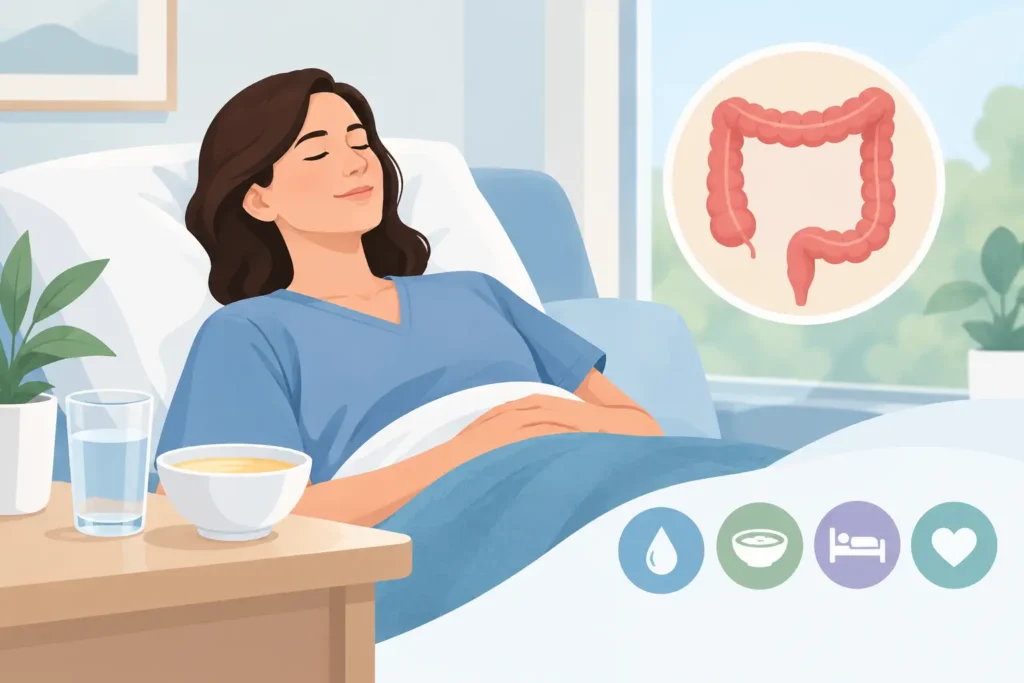
The bowel preparation can leave you hungry, thirsty, and a little depleted. Start by drinking water, an electrolyte beverage, broth, or another nonalcoholic fluid you tolerate well. Small, steady sips are often more comfortable than trying to catch up all at once.
Most patients can return to their regular diet later that day. However, a lighter first meal may feel better while the effects of prep and sedation wear off. Options such as soup, eggs, toast, rice, yogurt, lean protein, bananas, or cooked vegetables are often easy choices. If you have nausea, begin with bland foods and add variety as your appetite returns.
There is no universal requirement to avoid certain foods after a routine colonoscopy. The right approach depends on how you feel and what was done during the procedure. If your doctor removed a larger polyp or performed another therapeutic treatment, you may receive temporary dietary restrictions. Follow those instructions carefully.
Why gas and bloating are common
During colonoscopy, the care team introduces air or carbon dioxide into the colon so the physician can examine the lining clearly. Passing gas, feeling bloated, or having mild cramping afterward is expected. Walking around your home, using a warm compress, and allowing yourself to pass gas can help relieve the pressure.
These symptoms should steadily improve. Severe or worsening abdominal pain is not something to push through or assume is normal.
What your bowel movements may look like
Your first bowel movement after the procedure may not happen until the next day or even a few days later. Your bowel was emptied during preparation, so there may simply be little to pass. Stool consistency can also be temporarily different as you resume food and fluids.
If biopsies were taken or a small polyp was removed, you might see a small amount of blood with your first bowel movement. Your physician will tell you what amount is expected for your individual procedure. Persistent bleeding, clots, or bleeding that increases rather than improves requires urgent medical attention.
For patients who live with IBS, inflammatory bowel disease, chronic constipation, or diarrhea, returning to your usual bowel pattern may take longer. Continue your prescribed digestive medications unless your physician specifically instructed you to hold them.
Medications: follow your personalized instructions
Before you leave, your care team should review when to restart medications, including blood thinners, diabetes medications, insulin, iron supplements, and GLP-1 medications if applicable. The answer is not the same for every patient. It depends on your health history, the medication, and whether your physician performed biopsies or removed polyps.
Do not make assumptions about aspirin, anticoagulants, antiplatelet medications, or anti-inflammatory pain relievers. These medicines can affect bleeding risk, but stopping them without medical guidance can also be harmful. If you are unsure what to take that evening or the next morning, contact the office rather than guessing.
For mild discomfort, your discharge instructions may recommend acetaminophen. Ask before using ibuprofen, naproxen, or other medications that may affect bleeding, particularly after polyp removal.
When you can return to normal activity
For a routine procedure, many patients return to work, driving, exercise, and normal daily activity the next day. Listen to your body, especially if you are still tired from disrupted sleep, bowel prep, or sedation. A gentle walk is generally fine once you are steady on your feet, but save vigorous workouts and heavy lifting for the next day unless you received different instructions.
If you had a complex polyp removal, dilation, treatment for bleeding, or another advanced procedure, recovery limits may be more specific. Your gastroenterologist may ask you to avoid strenuous exercise, travel, or certain medications for a short period. This is a safety measure that supports healing.
Warning signs that need immediate attention
Complications after colonoscopy are uncommon, but recognizing them matters. Call your gastroenterology office right away or seek emergency care if you develop:
- Severe, persistent, or worsening abdominal pain
- A firm, markedly swollen abdomen or repeated vomiting
- Fever or chills
- Heavy rectal bleeding, blood clots, or black, tar-like stool
- Fainting, chest pain, shortness of breath, or inability to stay awake
A small amount of temporary bloating is different from severe pain. Likewise, a streak of blood after a biopsy may be different from ongoing bleeding. If you are concerned, contact your care team. It is always appropriate to ask for guidance when recovery does not feel right.
Understanding your results and next steps
Before you leave, your physician may discuss what was seen during the exam. Sometimes the colonoscopy is entirely normal. Other times, the doctor may find polyps, inflammation, diverticulosis, hemorrhoids, or another explanation for symptoms. If tissue samples were collected, final pathology results usually take additional time.
Try not to draw conclusions before those results are reviewed. A polyp is not automatically cancer, and inflammation can have several possible causes. Your gastroenterology team will explain what the findings mean, whether treatment is needed, and when your next screening or surveillance colonoscopy should occur.
For patients managing reflux, IBS, fatty liver disease, Crohn’s disease, ulcerative colitis, or weight-related metabolic concerns, a colonoscopy can be one piece of a broader care plan. At NJ Gastroenterology & Health Wellness, board-certified specialists can connect procedure findings with your symptoms, medications, nutrition, metabolic health, and long-term prevention goals.
A practical colonoscopy recovery guide for tomorrow
By the morning after your procedure, most people can resume their usual routine if they feel well. Drink fluids, eat balanced meals, and give yourself an extra night of sleep if the preparation left you tired. Keep your discharge paperwork where you can find it, especially if biopsies or polyp removal were part of the procedure.
The best recovery plan is not complicated: rest after sedation, follow your individualized instructions, and speak up early if something feels wrong. Your procedure is complete, but your care continues through the results, follow-up plan, and the choices that support your digestive health over time.