A fatty liver diagnosis can raise a difficult question: has inflammation already caused scarring? Liver fibrosis testing options help answer that question without assuming that every patient needs an invasive procedure. The right test depends on your medical history, liver enzyme results, metabolic health, medications, alcohol use, and whether there are signs of more advanced liver disease.
Fibrosis is the medical term for scar tissue in the liver. The liver can often recover from early injury when the underlying cause is addressed. However, ongoing inflammation can lead to increasing scar tissue, cirrhosis, and complications such as fluid buildup, internal bleeding, or liver cancer. Accurate testing helps your gastroenterologist determine the degree of risk and build a plan around treatment, monitoring, and long-term liver protection.
Why fibrosis testing matters in fatty liver disease
Fatty liver disease is common, particularly among people with obesity, insulin resistance, type 2 diabetes, high cholesterol, high blood pressure, or sleep apnea. Many people have no symptoms, even when liver inflammation or fibrosis is developing. Others may have nonspecific concerns such as fatigue or discomfort in the upper right abdomen, but symptoms alone cannot show how much scarring is present.
Routine blood work may reveal elevated liver enzymes, but normal enzyme levels do not always rule out fibrosis. Conversely, elevated results do not automatically mean permanent liver damage. This is why a thoughtful evaluation goes beyond one lab result. Your physician considers patterns over time, possible causes of liver injury, and tests that estimate liver stiffness or directly examine liver tissue when needed.
The goal is not simply to label a stage. It is to identify patients who need timely intervention while avoiding unnecessary invasive testing for those at low risk.
Liver fibrosis testing options your physician may use
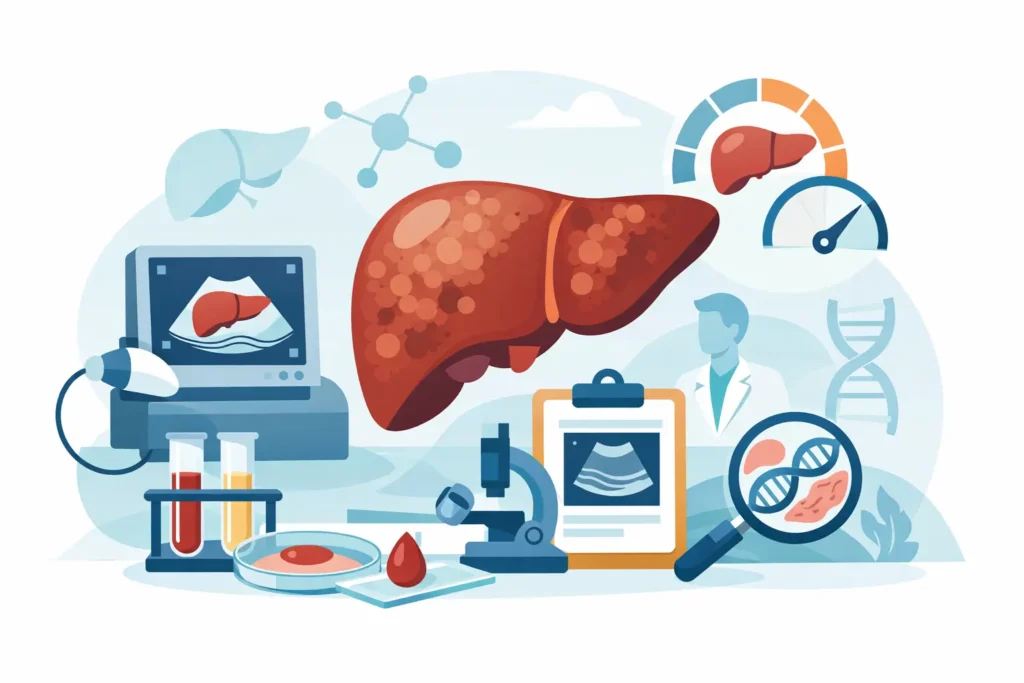
Most evaluations begin with simple, noninvasive tools and progress only if results are unclear or suggest a higher risk of significant scarring. No single test is perfect. Results are strongest when interpreted together with your health history and a specialist’s clinical judgment.
Blood tests and fibrosis scoring tools
Blood testing is usually the first step. A comprehensive liver panel can measure enzymes such as ALT and AST, along with bilirubin, albumin, platelet count, and other markers of liver function. Your physician may also order tests to evaluate viral hepatitis, autoimmune liver disease, iron overload, medication-related injury, or other causes of abnormal liver tests.
Some calculations combine routine lab values with factors such as age. The FIB-4 score, for example, uses age, AST, ALT, and platelet count to estimate the likelihood of advanced fibrosis. It is useful for identifying people who may be at low risk and those who need more evaluation. It does not diagnose fibrosis on its own, and its reliability can be limited in some age groups or during acute illness.
Specialized blood panels may also estimate fibrosis by measuring markers related to inflammation, tissue remodeling, or liver function. These tests can add useful information, but results may be affected by conditions outside the liver. They are best viewed as one part of a complete assessment rather than a final answer.
Ultrasound and elastography
A standard abdominal ultrasound can identify signs of fatty liver and look for changes that may suggest advanced liver disease. It is painless, widely available, and does not use radiation. However, a regular ultrasound cannot reliably measure early fibrosis or precisely stage the amount of scar tissue.
Elastography is a more advanced, noninvasive imaging test that measures liver stiffness. FibroScan is one commonly used form of vibration-controlled transient elastography. During the exam, a probe is placed over the skin on the right side of the abdomen. The test is quick, generally comfortable, and does not require needles or sedation.
A higher liver stiffness measurement can suggest more fibrosis, but stiffness is not caused by scarring alone. Active inflammation, congestion from certain heart conditions, or bile duct blockage can affect a reading. Food intake may also influence results, so patients are often asked to fast beforehand. Your care team will provide preparation instructions and explain what the result means in your specific situation.
Some centers use ultrasound-based shear wave elastography or magnetic resonance elastography, also called MRE. MRE uses MRI technology to assess liver stiffness and can be especially helpful when other noninvasive results are uncertain. It may be more accurate in certain circumstances, but it is not necessary for every patient and may be less convenient or more costly than other options.
Liver biopsy
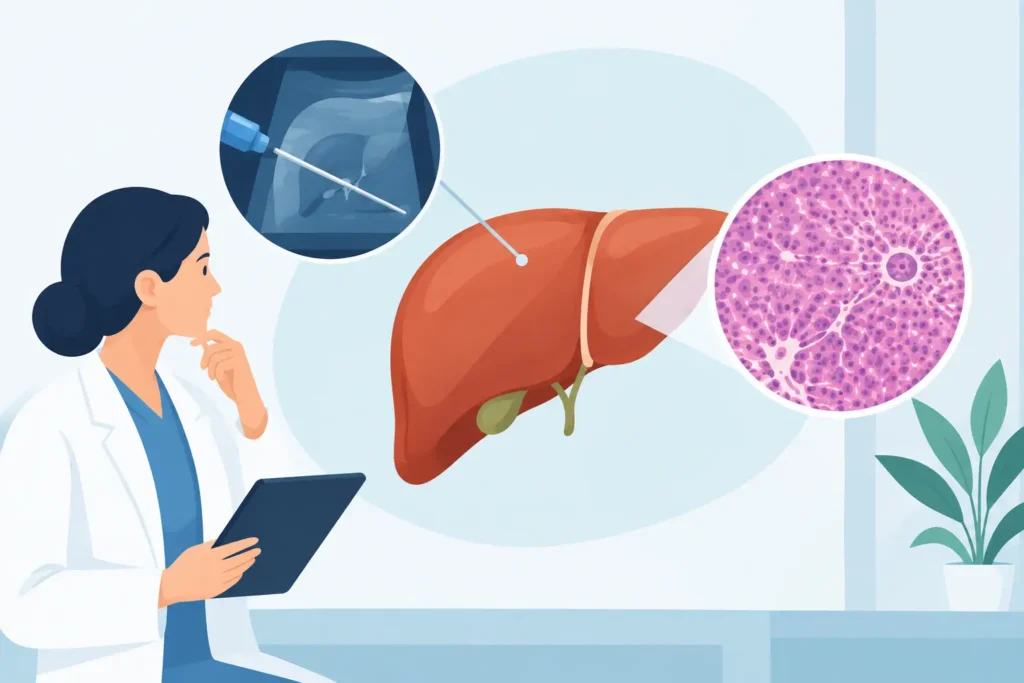
A liver biopsy involves removing a small sample of liver tissue for examination under a microscope. It remains the most direct way to assess inflammation, fibrosis, and certain patterns of liver disease. It can also help distinguish fatty liver disease from autoimmune hepatitis, drug-related liver injury, or other conditions when the diagnosis is not clear.
Because a biopsy is invasive, it is not the first choice for everyone. The procedure carries a small risk of bleeding, pain, and other complications, and it samples only a small part of the liver. A specialist may recommend it when noninvasive tests conflict, when advanced disease is suspected, or when the result will meaningfully change treatment decisions.
How your results are interpreted
Fibrosis is often described by stages from F0 to F4. F0 means no fibrosis, while F1 through F3 represent increasing levels of scarring. F4 generally indicates cirrhosis. These categories are clinically useful, but the conversation should focus on what the findings mean for you.
For example, a patient with mild fibrosis and metabolic risk factors may benefit most from a structured plan for weight reduction, nutrition, physical activity, diabetes management, and periodic follow-up testing. A patient with advanced fibrosis may need closer monitoring, screening for complications of cirrhosis, and more frequent specialist care. If viral hepatitis, alcohol-related liver disease, autoimmune disease, or another cause is involved, treatment will address that condition directly.
Weight management can be an essential part of fatty liver care, but it should be medically guided when obesity, diabetes, digestive symptoms, or medication considerations are also present. A physician-directed plan can coordinate liver monitoring with metabolic evaluation, nutrition support, lifestyle changes, and appropriate medication options for eligible patients.
What to expect at your liver evaluation
Your appointment should begin with a conversation, not just a test order. Be prepared to discuss prior imaging, recent lab work, prescription and over-the-counter medications, supplements, alcohol intake, family history, and changes in weight or health. Bring records if you have them, especially previous liver ultrasound reports or blood test results.
Your gastroenterologist will determine whether you need repeat labs, elastography, additional imaging, or referral for a biopsy. In many cases, testing can be completed in stages. This approach prevents unnecessary procedures while making sure a potentially serious concern is not overlooked.
At NJ Gastroenterology & Health Wellness, liver evaluation can be coordinated with digestive and metabolic care, helping patients address fatty liver disease in the context of their full health picture rather than as an isolated lab abnormality.
When to schedule an appointment
Consider a gastroenterology evaluation if you have fatty liver on imaging, persistently abnormal liver enzymes, type 2 diabetes with metabolic risk factors, a history of significant alcohol use, chronic viral hepatitis, or a family history of liver disease. Prompt care is particularly important if you notice yellowing of the skin or eyes, abdominal swelling, confusion, vomiting blood, black stools, or unexplained easy bruising. These symptoms require urgent medical attention.
A fibrosis test is not a judgment about past health choices. It is a practical way to see what your liver needs now. With timely evaluation and a personalized plan, many patients can reduce ongoing liver injury and take meaningful steps toward better long-term health.