A colonoscopy can find and remove a polyp before it has the chance to become cancer. That is the practical value of preventive screening. This colorectal polyp guide explains what polyps are, what your pathology report means, and why your recommended follow-up interval may differ from someone else’s.
Hearing that a polyp was found can be unsettling, but it does not automatically mean cancer is present or inevitable. Most colorectal polyps are benign growths on the inner lining of the colon or rectum. Some types can change slowly over years, which is why identifying and removing them during colonoscopy is one of the most effective tools for colorectal cancer prevention.
What Is a Colorectal Polyp?
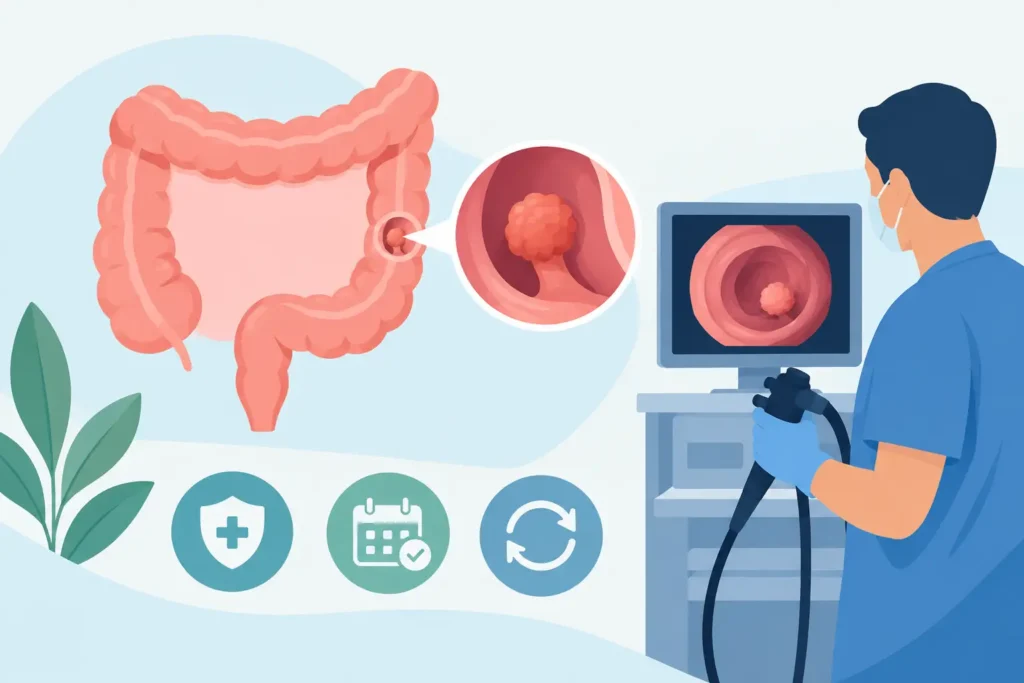
A colorectal polyp is a small cluster of cells that grows from the lining of the large intestine. Polyps vary in size, shape, number, and microscopic appearance. Some are flat, while others look more like a small mushroom attached to the colon wall by a stalk.
Polyps usually do not cause symptoms. They are often found during routine screening colonoscopy, before a patient feels any different. Larger polyps can occasionally cause rectal bleeding, a change in bowel habits, iron-deficiency anemia, or abdominal discomfort, but these symptoms can have many possible causes. They should be evaluated rather than attributed to a polyp without testing.
Age increases the likelihood of developing polyps, but age is not the only factor. A personal or family history of colorectal polyps or cancer, inflammatory bowel disease, smoking, heavy alcohol use, obesity, diabetes, and certain inherited conditions can affect risk. Your gastroenterologist considers your complete history, not just one risk factor, when recommending screening and surveillance.
The Main Types of Colorectal Polyps
The name on a pathology report matters because different types of polyps carry different levels of future cancer risk.
Hyperplastic polyps
Hyperplastic polyps are common, particularly in the lower colon and rectum. Most small hyperplastic polyps do not become cancerous and generally do not change the screening schedule significantly. There are exceptions, especially when polyps are larger, numerous, or located in certain parts of the colon, so the full pathology report still matters.
Adenomatous polyps
Adenomas are the most common precancerous polyps. They are not cancer, but some can gradually develop abnormal cellular changes and eventually become colorectal cancer if left in place. Removing an adenoma interrupts that process.
Pathologists may describe an adenoma as tubular, tubulovillous, or villous. They may also comment on dysplasia, which describes how abnormal the cells look under a microscope. Features such as larger size, multiple adenomas, villous components, or high-grade dysplasia can lead to a shorter surveillance interval.
Sessile serrated lesions
Sessile serrated lesions, sometimes called sessile serrated polyps, are another type of precancerous growth. They are often flat and can blend into the surrounding lining, particularly in the right side of the colon. Their subtle appearance is one reason careful colonoscopy technique and thorough bowel preparation are so valuable.
Not every serrated lesion carries the same level of risk. Size, location, number, and the presence of dysplasia all help guide the next steps.
Inflammatory polyps and other findings
Inflammatory polyps may occur in people with inflammatory bowel disease, such as Crohn’s disease or ulcerative colitis. These growths are not always precancerous themselves, but chronic intestinal inflammation can change a patient’s overall colorectal cancer surveillance needs. Less common polyp types may require a more individualized plan based on pathology and family history.
How Polyps Are Found and Removed
Colonoscopy remains the most complete exam for evaluating the colon because it can both detect and remove many polyps during the same procedure. During colonoscopy, a board-certified gastroenterologist guides a thin, flexible instrument with a camera through the colon while you are sedated and monitored for comfort and safety.
If a polyp is found, the physician can often remove it using specialized instruments passed through the colonoscope. Small polyps may be removed with a snare or biopsy forceps. Larger, flatter, or more complex lesions may require advanced removal techniques, a separate procedure, or referral for surgical evaluation. The appropriate approach depends on the polyp’s size, location, appearance, and whether it can be safely removed in one piece.
The removed tissue is sent to a pathology laboratory. Your colonoscopy report describes what was seen and what was done during the procedure. Your pathology report identifies the polyp type and any abnormal cell changes. Both reports are needed to make a precise follow-up recommendation.
What Determines Your Follow-Up Colonoscopy Schedule?
There is no single timeline that applies to every patient after polyp removal. Some people can return to average-risk screening intervals, while others need another colonoscopy sooner. Your recommended interval may depend on the number of polyps found, their size, their pathology, whether they were fully removed, the quality of bowel preparation, and your personal and family history.
For example, one or two small, low-risk adenomas may call for a longer interval than several adenomas, a large lesion, or a polyp with high-grade dysplasia. A colonoscopy with inadequate bowel preparation may need to be repeated earlier because small or flat lesions could have been harder to see.
This is also why it is helpful to keep a copy of your colonoscopy and pathology reports. If you change physicians or are unsure when you are due for screening, those details allow your new GI team to make an evidence-based recommendation rather than relying on memory alone.
Preparing for a High-Quality Colonoscopy
Bowel preparation is not a minor administrative step. A clean colon gives your gastroenterologist the visibility needed to identify small and flat lesions. Poor preparation can obscure polyps and may lead to an earlier repeat procedure.
Follow the preparation instructions exactly, including dietary changes, timing of the bowel-cleansing medication, and directions about medications. Tell your care team about blood thinners, diabetes medications, weight-loss medications, kidney disease, constipation, sleep apnea, and prior difficulty completing a bowel prep. These details may change the plan and help your procedure go more smoothly.
If nausea, vomiting, or another problem makes it difficult to complete the prep, contact the practice promptly. Do not simply stop without guidance. In many cases, the care team can recommend adjustments that preserve the quality of the exam.
When Symptoms Need Prompt Evaluation
Screening is designed for people without concerning symptoms. If you have persistent rectal bleeding, black stools, unexplained iron-deficiency anemia, unintentional weight loss, a lasting change in bowel habits, or new abdominal pain, you may need diagnostic evaluation regardless of your age or prior screening history.
These symptoms do not necessarily indicate a polyp or colorectal cancer. Hemorrhoids, diverticular disease, medication effects, infections, and other digestive conditions can cause similar concerns. Still, prompt medical evaluation is the safest way to identify the cause and avoid delays in care.
A family history can also change the timing of screening. Tell your gastroenterologist if a parent, sibling, child, or multiple relatives have had colorectal cancer, advanced polyps, or known inherited cancer syndromes. The age at which relatives were diagnosed is particularly useful information.
Questions to Ask After a Polyp Is Removed
Before you leave or when results are reviewed, make sure you understand what was removed and what happens next. Ask what type of polyp was found, whether it was completely removed, when pathology results will be available, and when your next colonoscopy is recommended. If your results suggest increased risk, ask whether family members should discuss earlier screening with their own physicians.
At NJ Gastroenterology & Health Wellness, colorectal screening and follow-up are approached as part of your broader digestive health picture. A personalized plan can account for your symptoms, medical history, family risk, medications, metabolic health, and comfort needs rather than treating a colonoscopy result as an isolated event.
The most useful next step is simple: keep your recommended surveillance appointment on the calendar, even when you feel well. Polyps rarely announce themselves, but timely screening gives your care team the opportunity to find and remove them early.