A fatty liver diagnosis often begins quietly – a routine blood test shows elevated liver enzymes, or an ultrasound performed for another reason finds extra fat in the liver. The next question is usually practical: Which fatty liver foods should I eat? Food choices can make a meaningful difference, but liver health is not about a short-term cleanse, a single “superfood,” or cutting out every carbohydrate.
For many adults, fatty liver disease is closely connected to insulin resistance, excess weight, high triglycerides, type 2 diabetes, sleep apnea, and metabolic syndrome. Effective treatment addresses those connections with an individualized plan that supports gradual, sustainable changes in eating, activity, weight, and overall metabolic health.
Why food matters for fatty liver disease
The liver processes nutrients, helps regulate blood sugar, and manages fats in the bloodstream. When the body has difficulty responding to insulin, more fat can be stored in liver cells. This condition is now commonly called metabolic dysfunction-associated steatotic liver disease, or MASLD. You may also hear the older term nonalcoholic fatty liver disease, or NAFLD.
Nutrition changes can help reduce liver fat, improve cholesterol and triglyceride levels, and support healthier blood sugar control. For people who are overweight or living with obesity, medically appropriate weight loss can also improve fatty liver disease. Even a modest, sustained reduction in body weight may benefit the liver, though the right goal depends on your health history, medications, lab results, and whether inflammation or scarring is present.
The best approach is usually a pattern of eating rather than a strict diet. Mediterranean-style eating is often recommended because it emphasizes minimally processed foods, fiber, healthy fats, and lean sources of protein without requiring extreme restriction.
Fatty liver foods to include more often
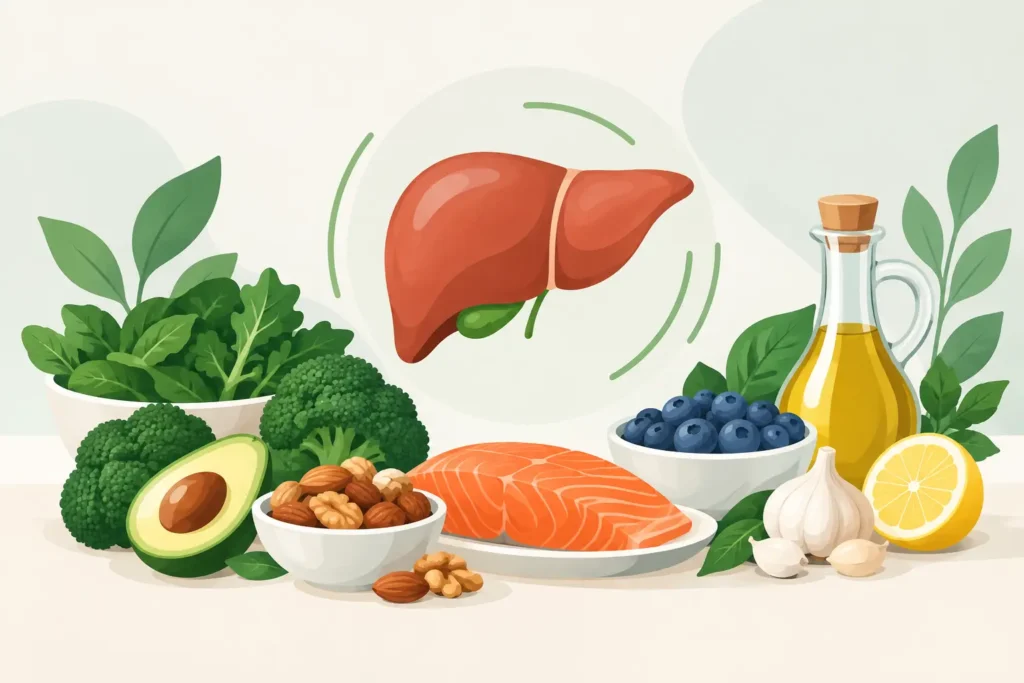
A liver-supportive eating pattern starts with foods that help you feel full, provide steady energy, and limit sharp rises in blood sugar. Vegetables, fruit, beans, whole grains, nuts, seeds, fish, and unsweetened dairy can all fit into this approach.
Vegetables should take up a substantial portion of most meals. Leafy greens, broccoli, cauliflower, peppers, tomatoes, carrots, zucchini, and other colorful choices provide fiber and nutrients with relatively few calories. Fresh, frozen, and low-sodium canned vegetables are all useful options, particularly when convenience is a barrier.
Fiber is especially helpful for people managing fatty liver disease because it supports fullness, regular bowel habits, and healthier glucose control. Choose whole-food carbohydrate sources such as oats, brown rice, quinoa, whole-grain bread, lentils, black beans, chickpeas, and sweet potatoes more often than highly refined grains. Carbohydrates do not need to be eliminated. The key is selecting higher-fiber portions and pairing them with protein and healthy fat.
Protein helps preserve muscle during weight loss and can reduce the urge to snack on highly processed foods. Fish, skinless poultry, eggs, Greek yogurt, cottage cheese, tofu, tempeh, and beans are practical choices. Fatty fish such as salmon, sardines, trout, and mackerel also provide omega-3 fats, which may support healthier triglyceride levels.
Unsaturated fats are another important part of a balanced plan. Olive oil, avocado, nuts, seeds, and natural nut butters can replace butter, shortening, or heavily processed snack foods. These foods are calorie-dense, so portion size still matters, particularly when weight management is a treatment goal.
Coffee may also have a role for some patients. Regular coffee consumption has been associated with lower risk of liver fibrosis in research studies. However, coffee is not a treatment on its own, and high-sugar flavored drinks can work against metabolic goals. If you have reflux, anxiety, heart rhythm concerns, or poor sleep, ask your clinician whether caffeine is appropriate for you.
Foods and drinks to limit for fatty liver
The foods most likely to worsen fatty liver are not always the foods patients expect. Added sugars, especially in sweetened drinks, are a major concern. Soda, sweet tea, energy drinks, specialty coffee beverages, juice cocktails, and sports drinks can add a large amount of sugar with little fullness. Fructose, commonly found in added sugars and high-fructose corn syrup, is processed by the liver and can contribute to liver fat when consumed frequently.
Desserts and packaged snack foods also deserve attention, but they do not need to be labeled permanently off-limits. A sustainable plan makes room for occasional choices while reducing the everyday pattern of cookies, candy, pastries, sweetened cereal, and ice cream. For many people, replacing sugary beverages is the highest-impact first step.
Refined carbohydrates can raise blood sugar quickly and may make it harder to manage insulin resistance. White bread, regular pasta, chips, crackers, and many baked goods are common examples. Rather than treating them as forbidden, consider reducing portion sizes and choosing higher-fiber alternatives more often.
Saturated fat should also be limited. Frequent intake of fatty cuts of red meat, processed meats, fried foods, full-fat cheese, and foods made with large amounts of butter or cream can make cholesterol and weight-management goals more difficult. A leaner protein or plant-based meal several times a week is often a realistic place to begin.
Alcohol requires individualized guidance. Alcohol can cause liver injury and may worsen fatty liver disease, especially if liver inflammation or fibrosis is present. Some patients should avoid alcohol entirely. Do not assume that a small amount is safe simply because a product is marketed as heart-healthy or natural. Your gastroenterology provider can recommend the safest course based on your liver tests, imaging, medications, and medical history.
Build meals around your real routine
The most effective meal plan is one you can follow during a busy workweek, family dinner, travel, and weekends. Start with a simple plate structure: fill about half the plate with non-starchy vegetables, include a palm-sized portion of protein, and add a high-fiber carbohydrate or healthy fat based on your energy needs and treatment plan.
For breakfast, plain Greek yogurt with berries, chia seeds, and a small handful of walnuts may be more satisfying than sweetened cereal. At lunch, a grilled chicken or chickpea salad with olive oil-based dressing can provide protein and fiber without the blood sugar spike of a large refined-grain meal. Dinner might be baked salmon, roasted vegetables, and quinoa or a small sweet potato.
There is no universal “perfect” diet for fatty liver. Some patients need help managing diabetes, while others need a plan that accommodates reflux, IBS, celiac disease, kidney disease, food preferences, cultural traditions, or a demanding schedule. Restrictive diets can backfire if they create hunger, guilt, or a cycle of overeating. A personalized plan should be specific enough to produce results and flexible enough to live with.
When fatty liver needs more than dietary changes
Food is a central part of fatty liver management, but it is not the only part. Liver enzyme levels can be normal even when fatty liver disease is present, and they do not always show the full degree of inflammation or scarring. Some people need additional testing to assess fibrosis, review medications, rule out other liver conditions, and determine their risk of progression.
Schedule a medical evaluation if you have persistent abnormal liver tests, fatty liver seen on imaging, type 2 diabetes, obesity, high cholesterol or triglycerides, or a family history of liver disease. Prompt assessment is also important for yellowing of the skin or eyes, abdominal swelling, confusion, vomiting blood, black stools, or unexplained weight loss.
At NJ Gastroenterology & Health Wellness, coordinated digestive, liver, and medical weight-management care can help patients move beyond generic diet advice. A physician-guided plan may include liver monitoring, nutrition counseling, lifestyle support, and, for eligible patients, evidence-based obesity treatment options that address the metabolic factors behind liver fat.
Small, consistent changes are more valuable than a perfect week of eating followed by frustration. Begin with one change you can repeat – such as replacing sugary drinks, adding vegetables at dinner, or planning a protein-rich breakfast – and bring your questions, labs, and health goals to a qualified medical visit.