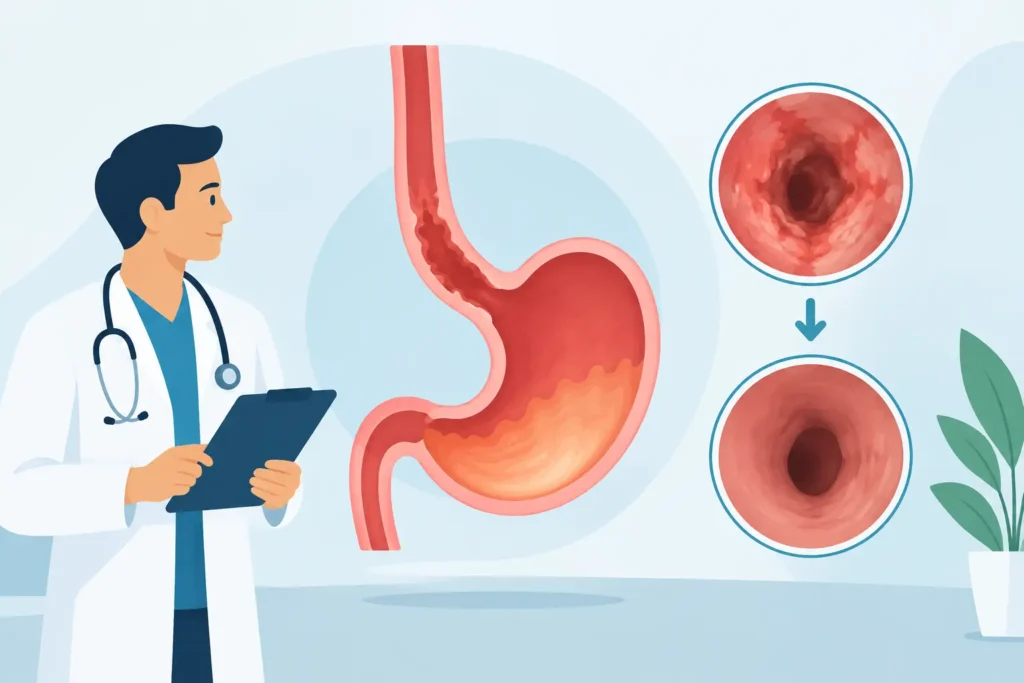

Bloating after meals, unpredictable bowel habits, heartburn that keeps returning, or unexplained abdominal discomfort can make “gut health” feel like a mystery. A thoughtful gut health testing guide starts with a more useful question: What symptoms are you having, how long have they been present, and what medical conditions could be contributing?
Testing should not be a guessing game or a collection of trendy at-home reports. The right evaluation is based on your personal history, symptoms, medications, family history, and health goals. For some people, the next step is a simple blood or stool test. For others, advanced diagnostic procedures such as colonoscopy or upper endoscopy may provide the clearest answers.
What Does Gut Health Testing Actually Evaluate?
“Gut health” is a broad term. In clinical care, it may involve the esophagus, stomach, small intestine, colon, liver, pancreas, digestive immune system, metabolism, and the bacteria that live in the gut. Because these systems are connected, the same symptom can have several possible causes.
For example, bloating may be related to constipation, food intolerance, celiac disease, irritable bowel syndrome (IBS), small intestinal bacterial overgrowth, medication effects, or changes in diet. Chronic diarrhea may be associated with IBS, inflammatory bowel disease, infection, celiac disease, pancreatic concerns, or microscopic colitis. Reflux symptoms can stem from gastroesophageal reflux disease (GERD), but persistent symptoms may also require evaluation for esophageal inflammation or Barrett’s esophagus.
The goal of testing is not to label every symptom as a microbiome problem. It is to identify or rule out medical conditions that need targeted treatment and create a plan that fits your long-term health.
When to Consider a Gut Health Evaluation
A short-lived stomach upset after a virus or unfamiliar meal often improves without extensive testing. Symptoms that persist, recur, interfere with daily life, or change over time deserve medical attention.
Consider scheduling a gastroenterology consultation if you have ongoing heartburn, trouble swallowing, frequent nausea, abdominal pain, bloating, constipation, diarrhea, urgency, or changes in stool appearance. Evaluation is also appropriate if you have been told you have fatty liver disease, elevated liver enzymes, obesity, metabolic syndrome, or a family history of colon cancer, inflammatory bowel disease, or celiac disease.
Symptoms That Need Prompt Medical Care
Some symptoms should not be managed with supplements, elimination diets, or a home test alone. Contact a medical professional promptly for rectal bleeding, black stools, vomiting blood, persistent vomiting, unexplained weight loss, fever with abdominal pain, jaundice, anemia, or a significant new change in bowel habits.
Adults who are due for colorectal cancer screening should also stay on schedule, even if they feel well. Colon cancer can develop without obvious symptoms in its earlier stages, which is why preventive screening is a separate and essential part of digestive health care.
A Gut Health Testing Guide: Tests Your Doctor May Recommend
Your physician will begin with a detailed conversation and physical exam. This first step matters because it helps avoid unnecessary testing while identifying the tests most likely to provide actionable information.
Blood Tests
Blood work can help assess anemia, infection or inflammation, nutritional deficiencies, thyroid conditions, liver function, kidney function, and metabolic health. Depending on symptoms, testing may also screen for celiac disease or evaluate pancreatic and liver concerns.
For patients with obesity or fatty liver disease, a broader metabolic evaluation can be particularly valuable. Insulin resistance, elevated cholesterol, high blood pressure, and liver inflammation may affect digestive symptoms and long-term health, even when they do not cause daily discomfort.
Stool Tests
Stool testing may be used to look for infection, blood not visible to the eye, inflammation, or problems with digestion and absorption. For patients with chronic diarrhea, a fecal inflammatory marker can help distinguish inflammatory bowel disease from conditions such as IBS, although no single test provides a diagnosis by itself.
Stool-based colorectal cancer screening may be an option for certain average-risk patients. However, a positive result requires a diagnostic colonoscopy, and patients with symptoms or increased risk may need colonoscopy as their first test.
Breath Tests
Breath testing can be useful in selected situations, including suspected lactose intolerance, fructose intolerance, or small intestinal bacterial overgrowth. These tests require specific preparation, and their results must be interpreted in the context of symptoms. A positive breath test does not automatically explain every digestive complaint.
Endoscopy and Colonoscopy
An upper endoscopy allows a gastroenterologist to examine the esophagus, stomach, and first part of the small intestine. It may be recommended for persistent GERD, difficulty swallowing, unexplained nausea or vomiting, suspected ulcers, anemia, or concern for celiac disease.
A colonoscopy examines the colon and can identify polyps, colorectal cancer, inflammation, bleeding sources, diverticular disease, and other conditions. It is both a screening and diagnostic tool because polyps can often be removed during the procedure.
Advanced procedures are not necessary for everyone with digestive symptoms. When they are recommended, they offer direct visualization and, when needed, biopsies that at-home testing cannot provide.
Imaging and Liver Assessment
Ultrasound, CT scans, MRI, and specialized liver testing may be considered for abdominal pain, suspected gallbladder disease, fatty liver disease, abnormal liver blood work, or unexplained symptoms. The appropriate scan depends on what your physician is evaluating. Imaging is most useful when chosen to answer a specific clinical question.
What About At-Home Microbiome Tests?
Commercial microbiome tests can be appealing because they promise personalized insight into the bacteria in your stool. The microbiome is an active area of research, and gut bacteria do influence digestion, immunity, and metabolism. But consumer test results often have important limits.
Microbiome composition can vary with recent diet, travel, antibiotics, supplements, illness, and even the timing of sample collection. More importantly, there is not yet a universal definition of a “perfect” microbiome or a reliable, evidence-based treatment plan for every reported imbalance.
These reports may be interesting, but they should not replace evaluation for persistent symptoms, preventive screening, or evidence-based testing. Before investing in supplements or restrictive diets based on a commercial report, discuss your symptoms and results with a qualified clinician.
How to Prepare for Your Appointment
Bring a clear symptom history. Note when symptoms began, what makes them better or worse, how often they occur, and whether they are connected to meals, stress, sleep, alcohol, or specific medications. A brief food and symptom journal can be useful, especially for bloating, reflux, or irregular bowel habits.
Also bring a current list of prescription medications, over-the-counter products, vitamins, and supplements. Products marketed for digestive wellness can affect symptoms and testing, including laxatives, antacids, probiotics, fiber products, iron, and weight-loss supplements.
Be ready to discuss personal and family history. Previous colonoscopy findings, surgeries, food reactions, liver conditions, and family history of colon cancer or inflammatory bowel disease can all change the recommended care plan.
Turning Results Into a Personalized Plan
Useful testing leads to a next step. That may include medication for GERD, nutrition changes for IBS, treatment for an infection, monitoring for fatty liver disease, colonoscopy surveillance, or a coordinated plan for weight and metabolic health.
There is rarely one universal “gut reset.” A highly restrictive diet may help one person temporarily while worsening nutrition, anxiety around food, or constipation in another. Likewise, probiotics may be appropriate in certain situations but are not a one-size-fits-all answer. The best plan addresses the diagnosed condition, your routine, and what you can realistically sustain.
At NJ Gastroenterology & Health Wellness, board-certified specialists can evaluate digestive symptoms alongside metabolic and liver health, helping patients move from uncertainty to a medically informed plan. If your symptoms are persistent or your preventive screening is due, a focused consultation can provide a far better starting point than trying to interpret your health alone.