
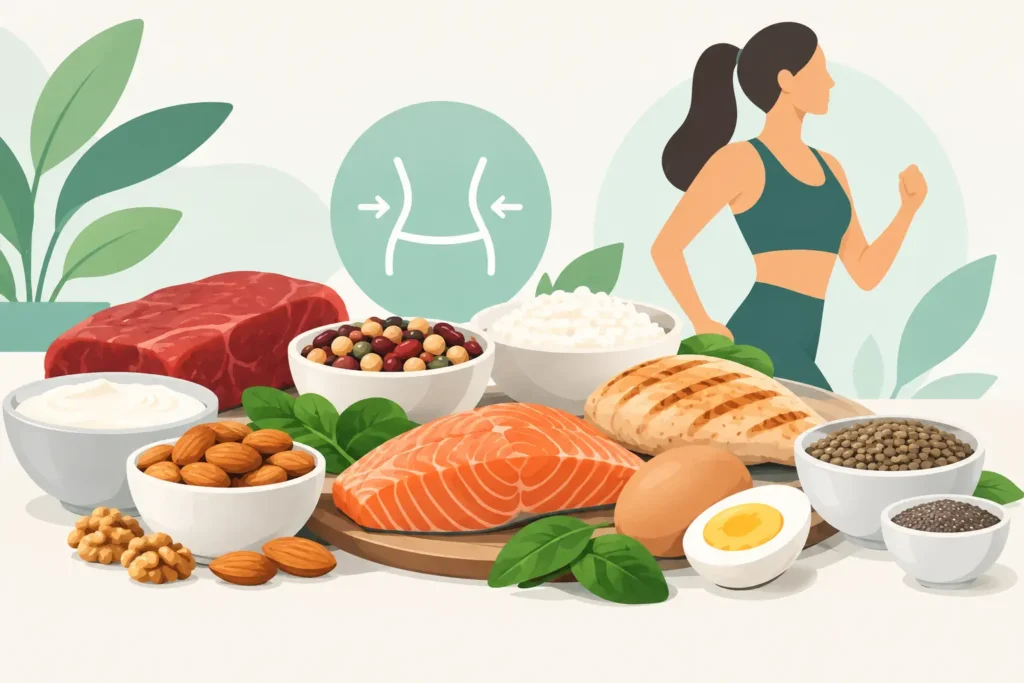
A breakfast that leaves you hungry by 10 a.m., or a lunch that leads to afternoon grazing, is not necessarily a willpower problem. It may be a protein problem. The best protein foods for weight loss can help you feel satisfied between meals, maintain lean muscle as weight changes, and build meals that are easier to continue long term.
Protein is not a shortcut, and more is not always better. The right amount and type depend on your medical history, kidney function, digestive symptoms, medications, activity level, and weight-management goals. For many adults, choosing protein deliberately is one practical part of a physician-guided plan that also addresses metabolism, sleep, movement, liver health, and nutrition.
Why protein matters during weight loss
When calorie intake decreases, the body can lose both fat and lean tissue. Adequate protein, paired with resistance or other regular physical activity when appropriate, helps support muscle preservation. That matters because muscle plays a role in strength, mobility, physical function, and metabolic health.
Protein also tends to be more filling than highly refined carbohydrate foods. A meal built around eggs, fish, yogurt, chicken, tofu, or beans may keep hunger more manageable than a meal centered on pastries, chips, or sweetened cereal. This does not mean carbohydrates are off limits. Fruits, vegetables, beans, and whole grains can be valuable parts of a balanced pattern. The goal is to give each meal enough staying power.
For patients using GLP-1 medications such as semaglutide or tirzepatide, protein can become especially relevant. These medications may reduce appetite significantly. When portions shrink, each bite needs to contribute meaningful nutrition. Small, protein-forward meals can be easier to tolerate than large meals, particularly if nausea, fullness, constipation, or reflux occurs.
12 best protein foods for weight loss
The best choice is one you can digest comfortably, enjoy consistently, and prepare without adding large amounts of calories from breading, heavy sauces, or excess added sugar. These foods offer useful options for a range of preferences.
1. Eggs
Eggs are affordable, versatile, and provide high-quality protein. A vegetable omelet, hard-boiled egg snack, or egg-and-avocado breakfast can be more satisfying than a carb-heavy morning meal. If reflux is a concern, pay attention to whether fried eggs, large portions, or rich breakfast sides trigger symptoms.
2. Plain Greek yogurt
Greek yogurt provides substantial protein in a convenient portion. Choose plain varieties to avoid the high added sugar found in many flavored products. Add berries, cinnamon, or a small amount of nuts for texture and fiber. If lactose causes bloating or diarrhea, lactose-free Greek yogurt or another protein source may be a better fit.
3. Cottage cheese
Cottage cheese is another simple dairy option that works at breakfast, as a snack, or alongside fruit and vegetables. It can be higher in sodium, so people managing high blood pressure should compare labels and choose lower-sodium options when available.
4. Chicken or turkey
Skinless chicken and turkey offer lean, complete protein and work well in salads, soups, grain bowls, and wraps. Roasting, grilling, baking, or slow-cooking usually creates a lighter meal than frying. Deli meats can be convenient, but they are often high in sodium and preservatives, so they should not be the primary source of poultry.
5. Fish and seafood
Fish provides protein while offering variety beyond poultry. Salmon, sardines, trout, shrimp, tuna, and cod can all fit into a weight-loss eating plan. Fatty fish such as salmon also contain heart-healthy fats. Preparation matters: grilled fish, baked seafood, or fish in a tomato-based dish will generally be more supportive of weight goals than heavily breaded or fried versions.
6. Lean beef or pork
Lean cuts of beef and pork can provide protein, iron, zinc, and vitamin B12. Look for portions such as sirloin, tenderloin, or lean ground meat, and use them as one component of a plate filled with vegetables and high-fiber carbohydrates. Processed meats, including bacon, sausage, and many hot dogs, are different from fresh lean meat and are better limited.
7. Tofu and tempeh
Soy foods are plant-based protein choices that can absorb the flavor of stir-fries, soups, and sheet-pan meals. Tofu is often gentle and easy to prepare; tempeh has a firmer texture and a nuttier flavor. For patients with IBS, portion size and personal tolerance can matter, since some plant foods may contribute to gas or bloating.
8. Beans, lentils, and chickpeas
Legumes provide protein along with fiber, which can support fullness and regular bowel habits. They are especially useful for people who want more plant-based meals. Start with a modest serving if beans commonly cause discomfort, and increase gradually while drinking enough fluids. Rinsed canned beans can be a convenient lower-sodium choice.
9. Edamame
Edamame offers a protein-rich snack or side dish with fiber and a satisfying texture. Choose lightly salted versions when possible. It can be a helpful alternative to crackers or chips when late-afternoon hunger tends to derail planned meals.
10. Protein-rich milk or soy milk
Unsweetened dairy milk, lactose-free milk, or fortified soy milk can add protein to smoothies, oatmeal, coffee, or a light meal. Many nut milks contain very little protein, despite being marketed as nutritious alternatives. Read the label rather than assuming every milk substitute provides the same nutritional value.
11. Canned tuna or salmon
Shelf-stable fish makes it easier to keep a protein option available when there is little time to cook. Mix tuna or salmon with Greek yogurt, mustard, herbs, and chopped vegetables instead of relying on large amounts of mayonnaise. Patients advised to monitor mercury exposure should discuss fish choices and frequency with their clinician.
12. Protein powder, when food is not enough
A simple protein shake can be useful after exercise, during a busy workday, or when medication-related appetite changes make solid food difficult. It should supplement, not replace, a varied eating pattern. Select products with limited added sugar, and be cautious with powders containing herbal blends, sugar alcohols, or high amounts of fiber if you have sensitive digestion.
How to build a protein-forward plate without overcomplicating it
Rather than chasing a perfect diet, begin by including a protein source at breakfast, lunch, and dinner. For many people, spreading protein across the day feels more manageable than trying to eat most of it at one meal. A balanced plate might include grilled chicken, roasted vegetables, and brown rice; or lentil soup with a side salad and Greek yogurt.
Portion needs vary. A physically active person trying to preserve muscle may need more protein than someone with a smaller body size or lower activity level. People with chronic kidney disease, certain liver conditions, or other medical concerns should not follow high-protein plans without individualized medical advice. A registered dietitian or physician can help translate a protein goal into meals that fit your health needs.
Cooking method deserves attention, too. A nutritious protein can quickly become a high-calorie meal when it is deep-fried, covered in creamy sauce, or paired with oversized refined starch portions. Choose grilling, baking, broiling, air-frying, poaching, or sautéing with measured amounts of oil. Flavor food with herbs, citrus, vinegar, garlic, ginger, and spices as tolerated.
When digestive symptoms change the plan
A food that supports weight loss on paper may not be right for your body at a particular time. Reflux may worsen with high-fat meals, spicy preparations, chocolate, or late-night eating. IBS symptoms may flare with certain legumes, dairy products, sweeteners, or large portions of raw vegetables. Active Crohn’s disease or ulcerative colitis may require a more individualized approach, especially during a flare.
Persistent bloating, nausea, abdominal pain, bowel changes, trouble swallowing, or unintended weight loss should not be treated as a reason to simply restrict more foods. These symptoms deserve medical evaluation. Digestive conditions, fatty liver disease, insulin resistance, medication effects, and sleep concerns can all influence weight and nutrition choices.
At NJ Gastroenterology & Health Wellness, physician-supervised weight management can coordinate nutrition planning with digestive, metabolic, and liver care. A personalized plan can help you choose protein foods that support your goals without ignoring symptoms or underlying health conditions.
A sustainable next step may be as simple as planning tomorrow’s breakfast around eggs, Greek yogurt, or tofu instead of hoping hunger stays away. If weight changes feel difficult despite consistent effort, compassionate medical guidance can help identify what your body needs and create a plan built for lasting health.