
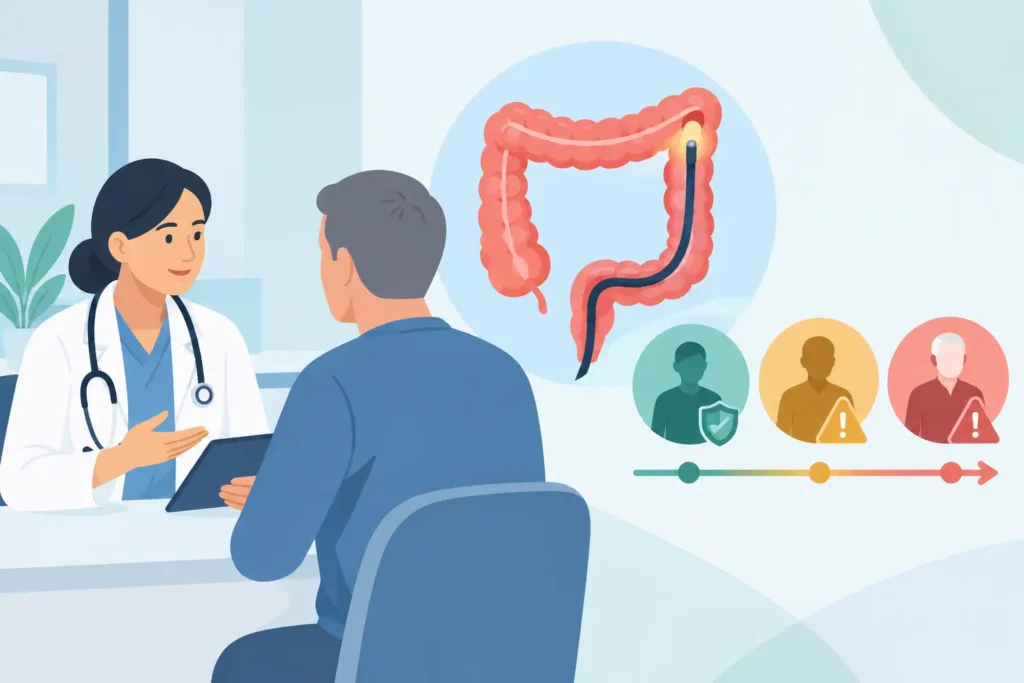
Colorectal cancer screening is not something to postpone until symptoms appear. By the time bleeding, anemia, unexplained weight loss, or a lasting change in bowel habits develops, an evaluation may be needed right away – not simply routine screening. For adults without symptoms, current colonoscopy age recommendations provide a clear opportunity to find and remove precancerous polyps before they become cancer.
The right age to start is not the same for every person. Your family history, prior polyps, inflammatory bowel disease, genetic risk, overall health, and screening history all matter. A conversation with a board-certified gastroenterologist can turn broad guidelines into a plan that fits your personal risk.
Colonoscopy Age Recommendations for Average-Risk Adults
For most adults at average risk for colorectal cancer, screening should begin at age 45. This recommendation applies to people without symptoms and without a personal or family history that puts them at higher risk. It reflects the rise in colorectal cancer diagnoses among younger adults and the benefit of identifying polyps early.
A colonoscopy is one screening option, and it offers a significant preventive advantage: during the procedure, your gastroenterologist can often remove polyps at the same time they are found. If your colonoscopy is complete, the preparation is adequate, and no polyps are identified, the next exam is commonly recommended in 10 years.
That interval is not automatic. If a polyp is found, its size, number, cell type, and features under the microscope affect when you should return. Some patients need follow-up in three, five, or seven years. Your procedure report and pathology results should guide the timeline rather than a one-size-fits-all calendar reminder.
Screening is routinely recommended through age 75 for average-risk adults who have not developed a condition that changes the plan. The goal is to use the years when screening is most likely to provide meaningful protection.
When You May Need a Colonoscopy Before Age 45
Starting at 45 is not appropriate for everyone. Earlier screening or surveillance may be recommended if you have a first-degree relative – a parent, sibling, or child – with colorectal cancer or certain advanced polyps. In many cases, screening begins at age 40 or 10 years before the age at which your relative was diagnosed, whichever comes first. The precise starting point and repeat interval depend on how many relatives were affected and how old they were at diagnosis.
A personal history of colon polyps or colorectal cancer also changes the schedule. So does a history of inflammatory bowel disease, including ulcerative colitis or Crohn’s colitis. People with long-standing colitis may begin colonoscopy surveillance about eight years after symptoms began, with repeat testing based on disease extent, inflammation, prior findings, and other risk factors.
Certain inherited conditions require an even earlier and more specialized approach. Lynch syndrome, familial adenomatous polyposis, and other hereditary cancer syndromes can substantially raise colorectal cancer risk. If multiple relatives have had colorectal, uterine, ovarian, stomach, pancreatic, or related cancers, especially at younger ages, a gastroenterologist may recommend genetic counseling and an individualized screening plan.
Your family history is worth revisiting over time. A new diagnosis in a close relative may change your recommendations, even if you have already had a normal colonoscopy.
Screening Age Is Different From a Diagnostic Colonoscopy
Age-based guidance applies to preventive screening in people who feel well. It does not mean that someone younger than 45 should wait if concerning symptoms are present.
Rectal bleeding, black stools, persistent diarrhea or constipation, new narrow stools, ongoing abdominal pain, iron-deficiency anemia, unexplained fatigue, or unintentional weight loss deserve medical attention. Many of these symptoms have causes other than cancer, such as hemorrhoids, infection, IBS, medication effects, or inflammatory conditions. Still, the cause should be evaluated rather than assumed.
A diagnostic colonoscopy may be appropriate at any adult age when symptoms, abnormal laboratory results, or imaging findings raise concern. The purpose is different from routine screening: the physician is looking for an explanation for a specific problem and determining what treatment or follow-up is needed.
What Happens After Age 75?
After age 75, colorectal cancer screening becomes a more individualized decision. Rather than stopping solely because of a birthday, your physician will consider your prior screening results, current health, life expectancy, medications, and ability to safely complete bowel preparation and sedation.
For example, a healthy 78-year-old who has never been screened may benefit from evaluation. A person of the same age with several serious medical conditions and multiple prior normal colonoscopies may be less likely to benefit from another routine procedure. For most adults over 85, routine colorectal cancer screening is generally not recommended.
This is where personalized care matters. The best plan weighs the potential to prevent cancer against the practical and medical risks of testing. It should reflect your health priorities, not just your age.
Is Colonoscopy the Best Screening Test for You?
Colonoscopy is considered a highly effective screening tool because it allows direct examination of the colon and removal of many polyps during the same procedure. It is particularly useful for people at increased risk, those with a prior history of polyps, and patients who need a diagnostic evaluation for symptoms.
Other stool-based tests may be appropriate for some average-risk adults who prefer a noninvasive option or are not ready for colonoscopy. These tests must be repeated more often and, if abnormal, require a follow-up colonoscopy. They also do not remove polyps.
The best screening test is the one that is medically appropriate and completed on schedule. If anxiety, preparation concerns, transportation, cost questions, or past experiences are making you hesitate, raise those concerns before deciding against screening. A gastroenterology team can explain what to expect and help identify an option that fits your risk and circumstances.
Preparing for a Safe, High-Quality Colonoscopy
A colonoscopy is only as effective as the preparation allows. Bowel cleansing instructions are designed to give the physician a clear view of the colon lining, where small or flat polyps can otherwise be missed. Follow the dietary and medication instructions closely, and ask about blood thinners, diabetes medications, iron supplements, constipation, kidney disease, or prior difficulty with bowel prep well before your appointment.
Most procedures are performed with sedation, and patients need a responsible adult to take them home. Serious complications are uncommon, but they can include bleeding, a reaction to sedation, or a perforation of the colon. Those risks are balanced against the potential benefit of finding cancer early or preventing it by removing polyps.
At NJ Gastroenterology & Health Wellness, the screening conversation begins with your full medical and family history, not just a checklist of birthdays. Our board-certified gastroenterology team can help determine whether you need routine screening, earlier surveillance, or a diagnostic evaluation for new symptoms.
A Screening Plan Should Be Personal
If you are turning 45, have a close relative with colorectal cancer or advanced polyps, or are unsure when your last colonoscopy was due, this is a good time to schedule a consultation. Bring any prior procedure and pathology reports if you have them. They can prevent unnecessary repeat testing and help your physician recommend the right interval.
A timely colonoscopy is not simply a test to cross off your list. It is a practical step that can protect years of future health – and it starts with knowing which recommendation applies to you.