
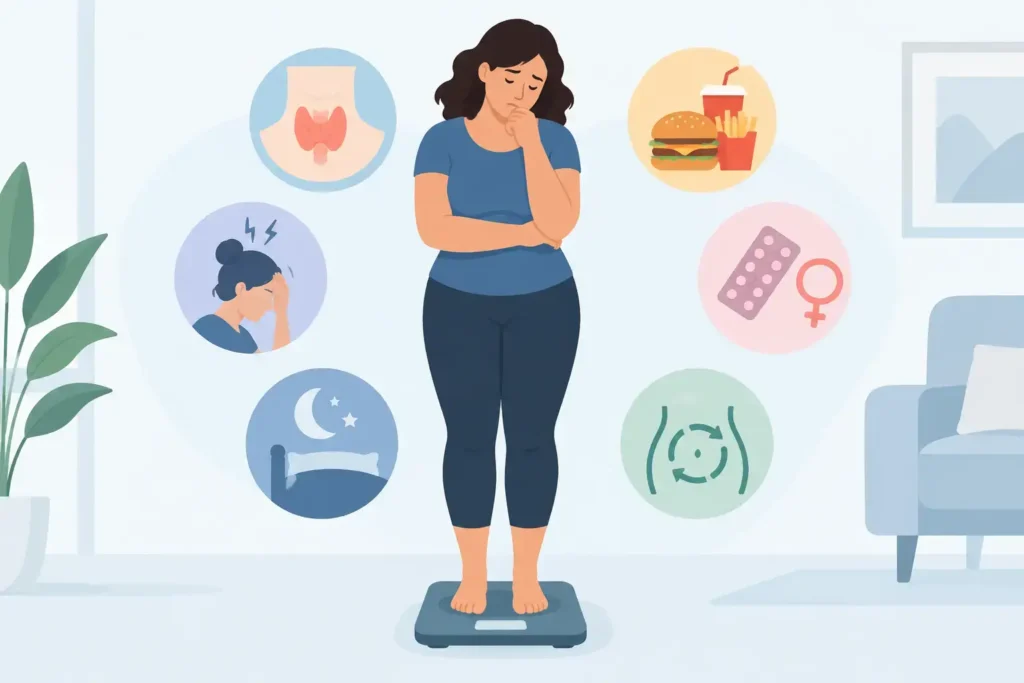
A few pounds can appear on the scale after a weekend of restaurant meals or less activity. But when weight continues to rise despite no clear change in your eating habits or exercise routine, it can feel frustrating and concerning. Understanding what causes unexplained weight gain starts with looking beyond calories alone. Hormones, medications, sleep, fluid retention, digestion, and underlying medical conditions can all affect body weight.
Weight changes are not a measure of willpower. A careful medical evaluation can help distinguish temporary shifts in fluid or digestion from a metabolic, endocrine, gastrointestinal, or medication-related concern that deserves treatment.
What Causes Unexplained Weight Gain?
“Unexplained” does not always mean there is no cause. Often, the cause is not obvious without reviewing your health history, symptoms, medications, sleep, stress, and laboratory results. Weight may also change for more than one reason at a time.
A person with insulin resistance, for example, may be more prone to weight gain while also experiencing poor sleep, joint pain that limits activity, or a medication that affects appetite. The right plan depends on the full picture, not a one-size-fits-all diet.
Changes in metabolism and insulin resistance
Metabolism is the set of processes your body uses to turn food into energy. It naturally changes with age, but age alone does not fully explain rapid or persistent weight gain. Muscle loss, lower activity levels, disrupted sleep, and changes in hormone signaling may reduce the number of calories the body uses over time.
Insulin resistance is especially common in adults with excess abdominal weight, prediabetes, type 2 diabetes, high triglycerides, high blood pressure, or fatty liver disease. When cells do not respond effectively to insulin, the body may produce more of it to keep blood sugar controlled. Higher insulin levels can make it harder to use stored fat for energy and may increase hunger or cravings.
A metabolic evaluation can identify patterns that are easy to miss when patients are simply told to eat less and exercise more. It may include a review of blood sugar, cholesterol, liver health, blood pressure, waist circumference, and personal and family history.
Hormonal conditions
Several hormonal conditions can contribute to weight gain, although they are less common than many online discussions suggest. Thyroid disorders are a frequent concern. An underactive thyroid, or hypothyroidism, can slow body processes and may cause fatigue, constipation, feeling cold, dry skin, and weight gain. Thyroid testing is useful when symptoms and history point in that direction.
Cushing syndrome, which involves excess cortisol, is rare but can cause weight gain around the abdomen, face, and upper back, along with easy bruising, muscle weakness, elevated blood pressure, or changes in blood sugar. Polycystic ovary syndrome, or PCOS, may contribute to insulin resistance and weight challenges in some women, particularly when irregular periods, acne, or increased facial hair are present.
Menopause can also change body composition. Many women notice that weight shifts toward the midsection during the menopausal transition, even if the scale changes only modestly. Hormonal changes, sleep disruption, reduced muscle mass, and changes in daily activity can all play a role.
Medications that affect appetite, fluid, or metabolism
Some prescription medications can contribute to weight gain or make weight loss more difficult. This does not mean you should stop a medication on your own. It means the medication should be reviewed with the clinician who prescribed it, particularly when the timing of weight gain matches when treatment began or changed.
Medications that may affect weight include certain antidepressants and antipsychotics, corticosteroids such as prednisone, some diabetes medicines, certain seizure medicines, beta-blockers, and hormonal therapies. The effect varies widely by medication and by individual. In some cases, another treatment option may be appropriate. In others, the health benefit of the medicine outweighs its impact on weight, and a physician-directed weight-management plan can help address the trade-off safely.
Fluid Retention Can Look Like Body-Fat Gain
Not all weight gain is body fat. Fluid retention can cause a noticeable change over days rather than weeks or months. A salty meal, menstrual cycle changes, long travel, or standing for extended periods can cause temporary swelling. Constipation can also increase scale weight and make the abdomen feel fuller.
More persistent swelling in the feet, ankles, legs, abdomen, or hands should be evaluated. Conditions involving the heart, kidneys, liver, veins, or certain medications can lead to fluid buildup. People with liver disease may develop abdominal swelling, known as ascites, which requires prompt medical attention.
Seek timely medical care if weight gain is sudden or accompanied by shortness of breath, chest discomfort, new leg swelling, abdominal distension, severe fatigue, or a rapid change in urination. These symptoms should not be treated as a routine weight-loss problem.
Sleep, Stress, and Daily Routines Matter
Sleep is often overlooked in conversations about weight. Consistently sleeping too little can alter hormones involved in hunger and fullness, increase cravings for high-calorie foods, and reduce energy for movement. Obstructive sleep apnea can be particularly relevant for adults who snore, wake unrefreshed, have daytime sleepiness, or have high blood pressure.
Chronic stress can affect eating patterns, sleep quality, and activity. Some people eat less under stress, while others experience stronger cravings or rely on convenience foods because they are exhausted and short on time. Stress also does not occur in isolation. Pain, caregiving responsibilities, mood symptoms, shift work, and financial pressures can all shape the routines that support metabolic health.
The goal is not to blame stress or assume every gain comes from lifestyle choices. It is to identify realistic changes that fit the person’s health, schedule, symptoms, and treatment needs.
Digestive and Liver Health Can Be Part of the Picture
Digestive symptoms do not usually cause significant fat gain on their own, but they can influence eating patterns and comfort. Bloating, constipation, reflux, and abdominal discomfort can make it difficult to tell whether the scale reflects body-fat change, retained stool, or fluid. Restrictive eating used to avoid digestive symptoms can also lead to irregular meals and less balanced nutrition.
Fatty liver disease is closely linked with insulin resistance, obesity, high cholesterol, and type 2 diabetes. It often has few noticeable symptoms, which is why evaluation matters for people with metabolic risk factors or abnormal liver blood tests. Improving metabolic health can support both long-term weight management and liver health.
At NJ Gastroenterology & Health Wellness, digestive, liver, and metabolic concerns can be evaluated together rather than treated as separate problems. This coordinated approach helps patients receive a plan based on medical findings, not assumptions.
When to Schedule a Medical Evaluation
Consider a medical appointment when weight gain is persistent, unexplained, or interfering with your health and daily life. An evaluation is especially worthwhile if you have gained weight rapidly, developed swelling, noticed major fatigue, have changes in bowel habits, or are struggling despite sustained efforts with nutrition and activity.
A physician may review your weight timeline, eating patterns, activity, sleep, stress, medications, menstrual or menopausal history, and digestive symptoms. Depending on your situation, testing may include blood sugar and cholesterol screening, thyroid studies, liver tests, kidney function, and other targeted evaluations. The purpose is not to order every test available. It is to investigate the most likely causes based on your individual symptoms and risks.
For eligible patients, physician-supervised obesity medicine may include nutrition guidance, lifestyle coaching, treatment of related conditions, and FDA-approved medications such as semaglutide or tirzepatide. These medications are not appropriate for everyone, and they work best as part of a personalized plan with ongoing medical monitoring.
A Better Next Step Than Guessing
If the number on the scale no longer matches your habits, keep a brief record of when the change began, any new symptoms, medication changes, sleep patterns, and menstrual changes if relevant. Bring that information to your appointment. It can help turn a vague concern into a focused clinical conversation.
You deserve more than a generic recommendation to try harder. A thoughtful assessment can clarify what is influencing your weight and create a practical path toward better metabolic, digestive, and long-term health.