
A screening test is most valuable before there is a problem to feel. That is the practical message behind 2026 colon cancer screening trends: more adults are being screened earlier, more test options are available, and individualized risk assessment is becoming central to prevention. Yet the best test is not simply the newest option. It is the test that fits your medical history, is completed correctly, and leads to appropriate follow-up when needed.
For adults in New Jersey, the goal remains clear. Find and remove precancerous polyps when possible, or identify colorectal cancer at an earlier and more treatable stage. A board-certified gastroenterologist can help you choose a screening plan based on your age, family history, symptoms, medications, prior results, and overall health.
2026 Colon Cancer Screening Trends Start Earlier
For adults at average risk, colorectal cancer screening generally begins at age 45. This recommendation reflects a sustained rise in colorectal cancer diagnoses among younger adults, including people in their 40s who may otherwise assume screening can wait until 50.
Starting at 45 does not mean every person needs the same test or the same interval. If you have a parent, sibling, or child with colorectal cancer or advanced polyps, your screening may need to begin earlier. The same can be true for people with certain inherited cancer syndromes, a personal history of polyps or colorectal cancer, or long-standing inflammatory bowel disease such as ulcerative colitis or Crohn’s colitis.
Symptoms also change the conversation. Rectal bleeding, unexplained iron-deficiency anemia, persistent changes in bowel habits, unexplained weight loss, or ongoing abdominal pain should not be managed as routine screening. These concerns may require diagnostic evaluation, often including colonoscopy, regardless of age.
Risk assessment is becoming more specific
One of the most meaningful trends is a move away from one-size-fits-all reminders. Clinicians are looking more carefully at the details that affect a patient’s actual risk: which relative had cancer, their age at diagnosis, prior polyp pathology, smoking history, metabolic health, inflammatory conditions, and prior screening quality.
That level of detail matters. A normal colonoscopy may allow a longer interval for an average-risk patient, while someone with multiple polyps, a large polyp, or certain tissue findings may need surveillance sooner. The right interval is based on the findings, not simply the calendar.
Colonoscopy Remains the Most Complete Option
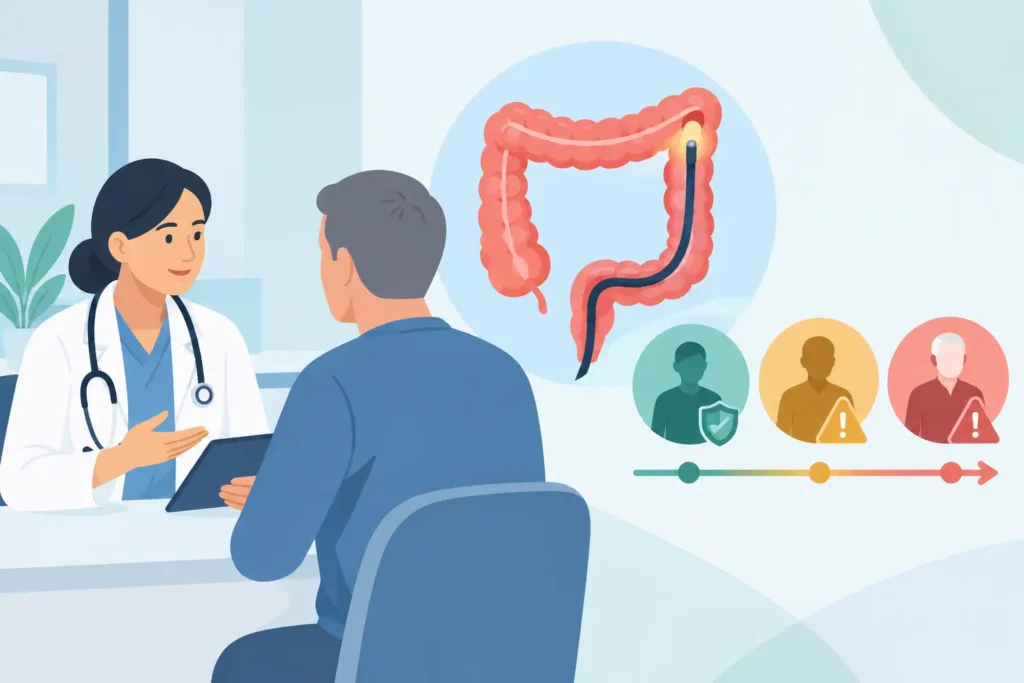
Colonoscopy continues to be the most comprehensive colorectal cancer screening and prevention tool. During one procedure, a gastroenterologist can examine the colon, identify abnormalities, take biopsies, and remove many polyps before they become cancerous.
For many average-risk adults with a normal, high-quality colonoscopy, the next screening colonoscopy may not be needed for 10 years. That long interval is an advantage for patients who want a thorough examination with the ability to treat polyps immediately.
Colonoscopy does require preparation, time away from normal activities, and sedation planning. Those are real considerations, and patients should be able to discuss them openly. Modern split-dose bowel preparation, clear instructions, and individualized medication guidance can make the experience more manageable and help produce a cleaner exam. A clean colon is not a minor detail – it directly affects how well the physician can see small polyps.
Advanced detection supports, but does not replace, expertise
Some endoscopy centers are incorporating enhanced imaging and computer-assisted polyp detection tools. These technologies may help highlight areas that deserve closer inspection, particularly small or subtle lesions. They are best viewed as an added layer of support.
Technology does not replace a careful examination by an experienced gastroenterologist. Preparation quality, complete visualization of the colon, appropriate withdrawal time, and sound clinical judgment remain essential parts of a high-quality colonoscopy.
Stool-Based Tests Expand Access, With One Critical Condition
Home stool-based screening tests continue to play an important role for average-risk adults who are not ready for colonoscopy or who face barriers to getting one. Fecal immunochemical tests, commonly called FIT tests, look for hidden blood in stool and are generally performed every year. Stool DNA tests combine blood detection with genetic markers and are completed on a different schedule, depending on the specific test and clinical recommendation.
These options can increase screening participation because they are performed at home and do not require sedation or bowel preparation. That convenience can be meaningful, especially for people balancing work, caregiving, transportation, or anxiety about procedures.
The trade-off is equally important: a positive stool-based test must be followed by a timely colonoscopy. The stool test is a screening step, not a diagnosis. Delaying the follow-up colonoscopy weakens the preventive value of the entire process.
Stool tests are also not the right choice for everyone. People with symptoms, significant family history, prior polyps, inflammatory bowel disease, or other higher-risk conditions often need colonoscopy-based evaluation instead. A patient should not assume that a home test is sufficient simply because it is available.
Better Preparation and Follow-Through Are Major Prevention Trends
In 2026, progress in colorectal cancer prevention is not only about new tests. It is also about helping patients complete each step correctly. Missed appointments, incomplete bowel preparation, uncertainty about insurance coverage, and lack of follow-up after an abnormal result can all create avoidable gaps in care.
Practices are increasingly using clearer preparation instructions, reminder systems, medication reviews, and personalized scheduling support. These details can improve the quality of a colonoscopy and reduce the chance that a patient postpones care because the process feels confusing.
Medication planning deserves particular attention. Blood thinners, diabetes medications, and GLP-1 medications used for weight management may require individualized instructions before a procedure. Patients should never stop or adjust a prescribed medication without direction from the physician managing their care. A coordinated plan protects safety while allowing the procedure to be performed effectively.
For patients receiving medically supervised weight management or treatment for fatty liver disease, colon cancer screening should remain part of the broader preventive plan. Improvements in metabolic health are meaningful, but they do not remove the need for age- and risk-appropriate cancer screening.
Surveillance Care Is Different From Routine Screening
The language around screening can be confusing. Routine screening applies to people without symptoms who are at average risk or who have a known risk-based starting plan. Surveillance is follow-up care for people with a history of polyps, colorectal cancer, or certain chronic inflammatory bowel diseases.
If a previous colonoscopy found polyps, the pathology report matters. Size, number, location, and microscopic features help determine when the next colonoscopy should occur. A patient who was told to return in three, five, or seven years should not assume the interval can be extended without reviewing the prior report.
Patients with ulcerative colitis or Crohn’s colitis may need specialized surveillance because chronic inflammation can increase colorectal cancer risk over time. In these cases, the timing and technique of colonoscopy are tailored to the extent and duration of disease, inflammation control, family history, and prior biopsy findings.
What to Discuss at Your Screening Visit
A productive screening consultation should leave you with a specific plan, not a generic recommendation. Bring any available records from prior colonoscopies, polyp pathology reports, and a clear family cancer history. If possible, ask relatives what type of cancer they had and the age at which they were diagnosed.
It is also reasonable to discuss your concerns about preparation, sedation, work schedules, and cost. For some patients, colonoscopy is clearly the preferred option. For others at average risk, a stool-based test may be an appropriate first step if they are committed to completing it on schedule and having a colonoscopy promptly if the result is abnormal.
NJ Gastroenterology & Health Wellness approaches screening as part of whole-person care. Digestive symptoms, inflammatory disease, liver health, medications, and metabolic concerns can all affect the right next step. The focus is on a medically appropriate plan that feels clear, safe, and achievable.
The most useful trend to carry into 2026 is simple: do not wait for symptoms to make prevention a priority. Schedule a conversation, confirm your personal risk, and choose the screening path you are prepared to complete.