
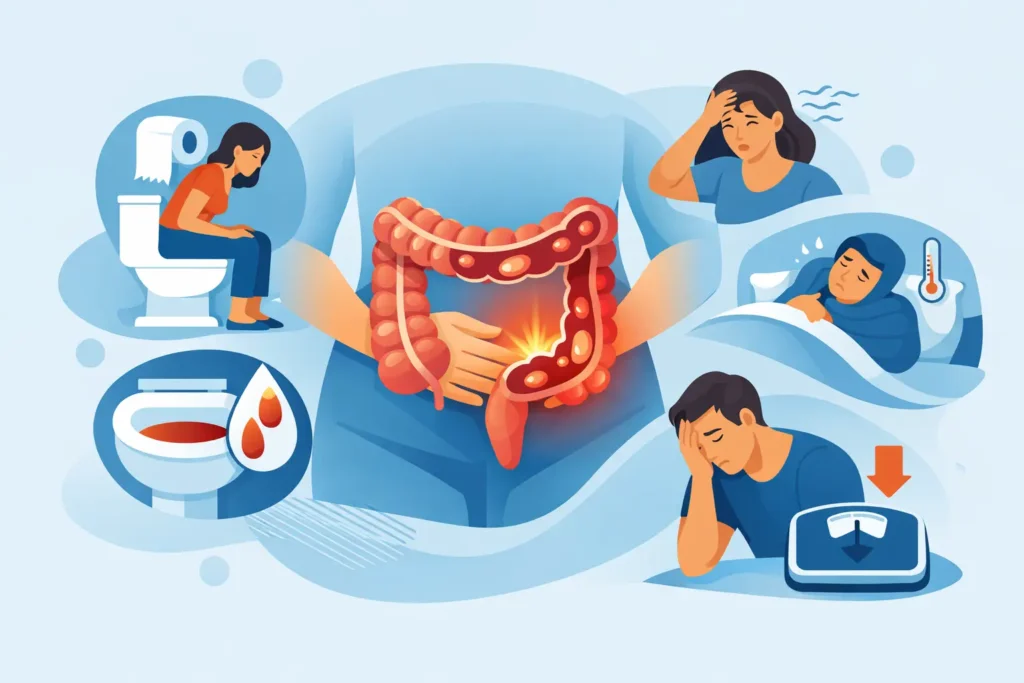
A flare can feel different from one person to the next, but ulcerative colitis flare symptoms should never be dismissed as a passing stomach problem. A sudden increase in urgency, blood in the stool, frequent diarrhea, or cramping may mean inflammation is active in the colon. Prompt, individualized care can help control symptoms, lower the risk of complications, and support your ability to work, eat, travel, and live more comfortably.
Ulcerative colitis is a chronic inflammatory bowel disease that affects the lining of the large intestine and rectum. Symptoms can quiet down during remission and return during a flare. The goal is not simply to get through each episode. It is to identify active inflammation, treat it effectively, and create a long-term plan that helps protect colon health.
Common Ulcerative Colitis Flare Symptoms
The most recognizable sign of a flare is a change in bowel habits. Diarrhea may become more frequent, sometimes occurring many times a day, and stools may contain blood, mucus, or both. Some patients feel an intense need to have a bowel movement even when little stool passes. This sensation, called tenesmus, can be especially disruptive when inflammation involves the rectum.
Abdominal cramping, lower abdominal pain, bloating, and gas can also increase during active disease. Pain may improve after a bowel movement, but that is not always the case. While mild discomfort can occur for many digestive reasons, pain combined with bloody diarrhea or escalating urgency deserves medical attention.
A flare can affect more than the digestive tract. Ongoing blood loss and inflammation can contribute to fatigue, weakness, dizziness, reduced appetite, unintentional weight loss, or fever. Some people also develop joint pain, eye redness or pain, skin rashes, or mouth sores. These are known as extraintestinal manifestations, and they can signal that ulcerative colitis is not fully controlled.
Symptoms do not always match the severity of inflammation. A person can have significant colon inflammation with relatively modest symptoms, while another may have distressing symptoms from irritation, infection, or an overlapping condition such as irritable bowel syndrome. That is why a gastroenterology evaluation is more reliable than trying to judge a flare based on symptoms alone.
When Flare Symptoms Need Urgent Care
Contact your gastroenterology team promptly if diarrhea, bleeding, urgency, or pain is worsening, if symptoms are interrupting sleep, or if you cannot keep up with fluids and nutrition. Early guidance may prevent a mild change from becoming a more serious flare.
Seek urgent medical care for severe abdominal pain or swelling, a high fever, fainting, confusion, rapid heartbeat, persistent vomiting, heavy rectal bleeding, or signs of dehydration such as very dark urine and inability to urinate normally. These symptoms can point to serious complications, including severe colitis, major blood loss, or toxic megacolon, a rare but potentially life-threatening enlargement of the colon.
Do not wait for a scheduled follow-up if you are concerned. Ulcerative colitis can change quickly, and the right next step depends on your symptoms, medical history, medications, and overall condition.
Why Flares Happen
A flare does not always have one clear cause. In many cases, inflammation returns because a treatment is no longer providing enough control or medication has been missed, stopped, or absorbed differently. Even a medication that worked well in the past may need to be adjusted over time.
Infections can mimic or trigger a flare, particularly after antibiotic use, travel, or exposure to someone who is ill. Stool testing may be needed to rule out infections such as C. difficile before increasing immune-suppressing treatment. This is one reason it is not safe to self-treat every increase in diarrhea as an ulcerative colitis flare.
Stress does not cause ulcerative colitis, but it can worsen how symptoms feel and make sleep, nutrition, and medication routines harder to maintain. Anti-inflammatory pain medicines known as NSAIDs, including ibuprofen and naproxen, may aggravate symptoms for some patients. Smoking changes, dietary changes, and other health conditions can also affect your digestive pattern. A detailed discussion with your physician can help separate a possible trigger from coincidence.
How Gastroenterologists Evaluate Active Disease
A thorough evaluation starts by listening carefully. Your physician will ask about the number and character of bowel movements, bleeding, pain, nighttime symptoms, fever, food intake, recent medications, and the impact on daily life. This personal history matters because it helps determine how quickly testing or treatment changes are needed.
Blood work may check for anemia, inflammation, dehydration, nutrition concerns, and medication safety. Stool studies can help identify infection and measure intestinal inflammation. One common stool marker, fecal calprotectin, can support the assessment of whether symptoms are likely related to active inflammation.
Depending on the situation, a colonoscopy or flexible sigmoidoscopy may be recommended to directly assess the colon lining and obtain biopsies. Advanced endoscopic evaluation can clarify the extent and severity of inflammation, evaluate healing, and guide a more precise treatment plan. It also remains a critical part of long-term colon cancer surveillance for people with longstanding ulcerative colitis.
Treatment Is Based on Severity, Location, and Your History
There is no single treatment plan for every flare. Mild inflammation limited to the rectum or lower colon may respond to topical rectal therapy, oral anti-inflammatory medication, or a combination of both. More extensive or moderate disease may require corticosteroids for short-term control and a maintenance treatment to prevent symptoms from returning.
For moderate to severe ulcerative colitis, treatment options may include biologic therapies, targeted oral medications, or immune-modifying therapies. The best choice depends on the location and severity of disease, prior treatment response, other medical conditions, pregnancy plans, infection risk, and personal preferences. Corticosteroids can be useful for bringing a flare under control, but they are not designed for long-term maintenance because of their potential side effects.
Medication adherence is central to preventing future flares. If a prescription causes side effects, creates cost concerns, or is difficult to fit into your routine, tell your care team before stopping it. There may be a safer alternative, a different delivery method, or support for managing the treatment plan.
Practical Steps While You Wait for Guidance
During a suspected flare, prioritize hydration. Frequent diarrhea can cause fluid and electrolyte losses, so small, regular sips of water, broth, or an oral rehydration drink may be easier to tolerate than large amounts at once. If eating is difficult, choose simple foods you know are usually well tolerated, but avoid overly restrictive diets without medical advice. Your body still needs calories and protein to recover.
Keep a brief record of bowel movements, bleeding, pain, temperature, foods, and medications. This gives your gastroenterologist useful information and can make a telemedicine or in-office consultation more productive. Do not use anti-diarrheal medication, NSAIDs, leftover steroids, supplements, or another person’s prescription without discussing it with your clinician. Some of these choices can mask worsening disease or create additional risk.
It also helps to plan for the practical burden of symptoms. Identify nearby restrooms when you leave home, carry supplies that help you feel prepared, and communicate with work or family when you need support. These adjustments do not replace treatment, but they can reduce stress while care is being arranged.
A Plan for More Than the Next Flare
Effective ulcerative colitis care extends beyond responding to urgent symptoms. It includes monitoring inflammation even during remission, reviewing medication effectiveness and safety, screening for anemia and nutrition deficiencies, and scheduling appropriate colon surveillance. Regular follow-up creates an opportunity to address the symptoms that patients sometimes normalize, such as minor bleeding, increasing urgency, or fatigue.
At NJ Gastroenterology & Health Wellness, board-certified gastroenterology care is built around a clear evaluation of your symptoms, appropriate diagnostic testing, and a treatment plan tailored to your disease and health goals. If ulcerative colitis symptoms are changing, timely care can provide answers and help you move toward steadier, more predictable days.
Your symptoms are useful clinical information, not something you need to endure in silence. Reaching out when your pattern changes is a practical step toward protecting your colon health and your quality of life.