When blood tests or imaging suggest a liver concern, the next step is not always another scan. A liver biopsy may provide the level of detail needed to identify inflammation, measure scar tissue, confirm a diagnosis, and guide a treatment plan that fits your health history.
For many patients, hearing the word “biopsy” brings understandable questions about pain, risk, and why the test is necessary. In reality, a liver biopsy is a focused diagnostic procedure used selectively when the answer will meaningfully affect care. Your gastroenterologist considers your symptoms, lab results, medications, imaging, metabolic health, and personal risk factors before recommending it.
What a liver biopsy can show
The liver performs hundreds of essential functions, including processing nutrients and medications, producing proteins, and helping regulate blood sugar and cholesterol. It can also develop damage quietly. Many liver conditions cause few or no symptoms until they have progressed, which is why an elevated liver enzyme level or an abnormal ultrasound deserves thoughtful follow-up.
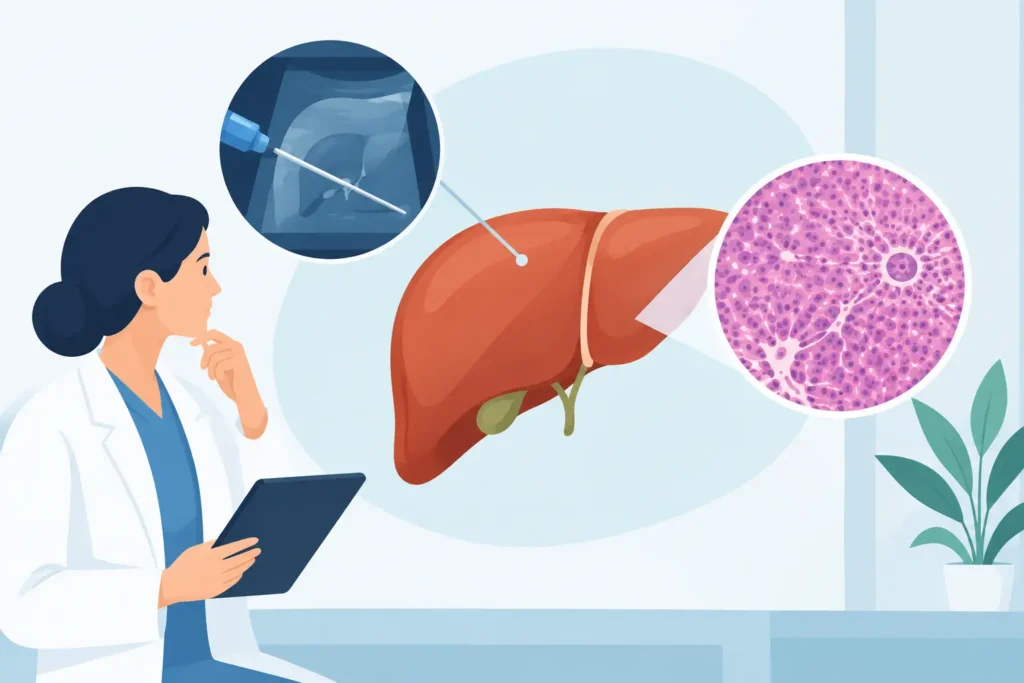
During a biopsy, a small sample of liver tissue is examined under a microscope by a pathologist. This allows your care team to see changes that blood work and imaging may suggest but cannot always confirm. A biopsy may help determine whether there is fat accumulation, inflammation, fibrosis, cirrhosis, iron buildup, medication-related injury, autoimmune activity, or another cause of liver disease.
For patients with fatty liver disease, the distinction is especially useful. Fat in the liver may be present without significant injury, or it may be accompanied by inflammation and progressive scarring. The amount and pattern of fibrosis can help determine how closely the liver should be monitored and how urgently metabolic risk factors such as excess weight, diabetes, high triglycerides, or insulin resistance need to be addressed.
When your specialist may recommend a liver biopsy
A liver biopsy is not automatically needed for every abnormal liver test. Noninvasive tools, including specialized blood tests and liver elastography, can often estimate fibrosis and help monitor many patients. However, these tests can occasionally produce uncertain or conflicting results.
Your gastroenterologist may recommend a biopsy when the diagnosis remains unclear, when several possible liver conditions need to be separated, or when knowing the degree of inflammation and scarring will change treatment decisions. It may also be considered when imaging finds a liver lesion that needs further evaluation, although the approach depends on the appearance and location of the finding.
Common situations include persistently elevated liver enzymes, suspected autoimmune hepatitis, possible drug-induced liver injury, unexplained liver dysfunction, chronic hepatitis, and fatty liver disease with concern for more advanced inflammation or fibrosis. The decision is individualized. A patient with stable lab results and reassuring noninvasive testing may be monitored without a biopsy, while someone with worsening tests or multiple metabolic risk factors may benefit from a clearer answer.
How the procedure is performed
The most common approach is a percutaneous liver biopsy. After reviewing your medical history and recent blood work, the clinician uses ultrasound or another imaging method to identify a safe area for the sample. You lie on your back or slightly turned to one side while the skin is cleaned and numbed with local anesthetic.
The biopsy needle is inserted briefly to collect a small tissue sample. The collection itself generally takes only a moment. Some patients feel pressure or a short, sharp sensation, and a temporary ache in the right shoulder can occur because of nerve pathways near the liver. Sedation may be used in certain circumstances, depending on the procedure plan and your needs.
If a standard needle approach is not appropriate because of bleeding risk, fluid in the abdomen, or other medical factors, a transjugular liver biopsy may be considered. In this method, the sample is obtained through a vein in the neck. Your specialist will explain which technique is safest and why.
Preparing for a liver biopsy
Preparation begins with a careful safety review. Your care team will ask about prescription medications, over-the-counter pain relievers, supplements, allergies, prior bleeding problems, and any history of liver or kidney disease. Blood-thinning medications, aspirin, anti-inflammatory medicines, and some supplements may need to be adjusted before the procedure. Do not stop prescribed medication on your own. Follow the instructions provided by your clinician.
You may also need blood tests to check platelet levels and how well your blood clots. Fasting instructions vary based on whether sedation is planned, so confirm exactly when you should stop eating or drinking. Arrange for a responsible adult to drive you home if you receive sedation or if your care team advises it.
Wear comfortable clothing and plan for a lighter day afterward. Asking questions before the procedure can reduce anxiety. You should understand the reason for the biopsy, the planned method, how to manage medications, and when to expect results.
Recovery and potential risks
After the biopsy, you will be monitored for several hours. Staff check your blood pressure, pulse, comfort level, and the biopsy site before you go home. Most people can return to normal daily activity within a day or two, but strenuous exercise, heavy lifting, and alcohol should be avoided for the timeframe your clinician recommends.
Soreness near the biopsy site is common and is usually manageable with the pain medication your care team approves. Because the liver has a rich blood supply, bleeding is the main serious risk, though significant complications are uncommon when patients are appropriately screened and monitored. Infection, injury to nearby structures, and a bile leak are also rare possible complications.
Contact your care team promptly or seek urgent evaluation for severe or worsening abdominal pain, chest pain, trouble breathing, dizziness or fainting, fever, repeated vomiting, increasing swelling, or bleeding from the biopsy site. Clear aftercare instructions are part of safe, patient-centered biopsy care.
Understanding your liver biopsy results
Pathology results typically take several days, sometimes longer if specialized testing is needed. The report may describe steatosis, which means fat in liver cells; inflammation; ballooning injury to liver cells; fibrosis; or cirrhosis. Fibrosis is often graded by stage, with higher stages reflecting more extensive scar tissue.
A result is not simply “good” or “bad.” It provides a clinical picture that must be interpreted alongside your lab results, imaging, symptoms, alcohol use, medication history, family history, nutrition, and metabolic health. For example, fibrosis may improve when the underlying cause is identified and treated, particularly before cirrhosis develops. The next steps may include medication, vaccinations, alcohol reduction or avoidance, diabetes management, nutrition guidance, weight management, repeat testing, or closer liver surveillance.
For people living with fatty liver disease, sustained weight loss can reduce liver fat and inflammation. The right plan is personal. Some patients benefit from structured nutrition and activity support alone, while others may be eligible for physician-supervised medical weight management. Treating metabolic health is not separate from liver care. It is often central to protecting the liver over time.
Care that connects liver and metabolic health
A liver diagnosis can feel overwhelming when it arrives alongside concerns about weight, blood sugar, cholesterol, or digestive symptoms. The most effective care looks at those connections rather than treating each result in isolation. At NJ Gastroenterology & Health Wellness, board-certified specialists can help patients move from an abnormal test to a clear diagnostic plan and practical next steps.
If a liver biopsy has been recommended, the goal is not to create more uncertainty. It is to replace assumptions with information that can support informed choices, focused treatment, and ongoing protection of your liver health.