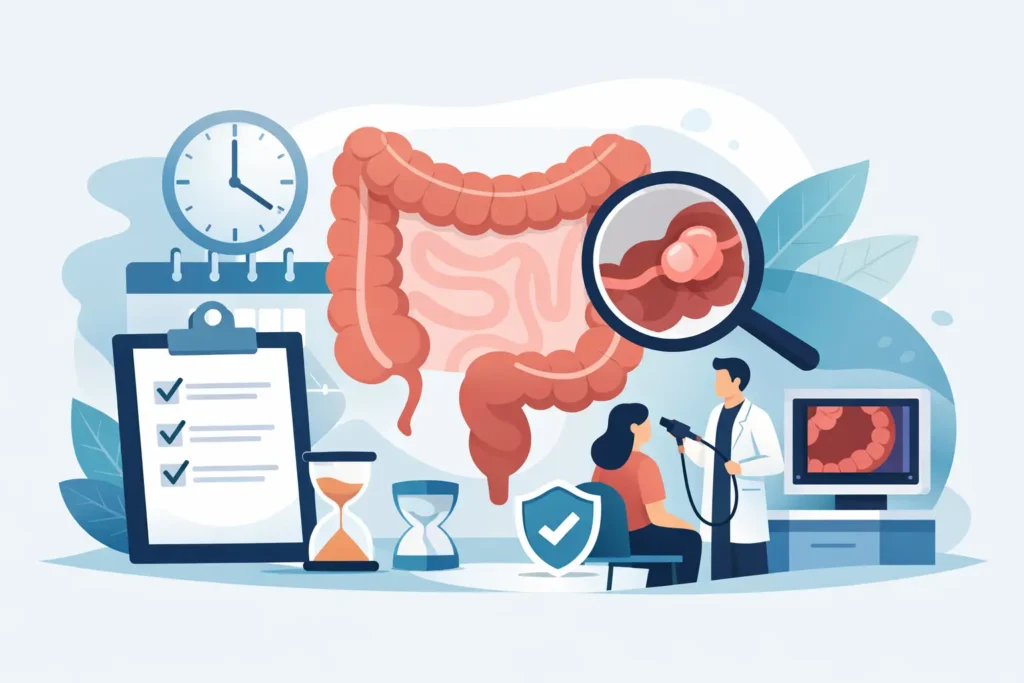
A colonoscopy can find and remove precancerous polyps before they become cancer. That preventive benefit is why colonoscopy screening guidelines matter – but the right schedule is not identical for every patient. Your age, family history, prior results, digestive conditions, and symptoms all help determine when screening should begin and how often it should be repeated.
For many adults, colorectal cancer screening starts at age 45. However, patients with a higher risk may need a colonoscopy well before then, while a person with a normal exam and average risk may not need another one for 10 years. A board-certified gastroenterologist can turn broad recommendations into a plan that fits your personal history.
Colonoscopy Screening Guidelines for Average-Risk Adults
For adults at average risk of colorectal cancer, major U.S. medical organizations recommend beginning regular screening at age 45. Average risk generally means you do not have a personal history of colon polyps, colorectal cancer, inflammatory bowel disease, certain inherited cancer syndromes, or a strong family history of colorectal cancer or advanced polyps.
Colonoscopy is one accepted screening option and is typically repeated every 10 years when the examination is complete, the bowel preparation is adequate, and no concerning findings are identified. Its advantage is that it is both a screening and treatment procedure: if your gastroenterologist finds a polyp, it can often be removed during the same exam and sent for laboratory evaluation.
Other screening tests may be appropriate for some average-risk patients. These include annual stool-based tests, stool DNA testing at specified intervals, CT colonography, and flexible sigmoidoscopy. Each approach has different preparation requirements, timing, accuracy, and follow-up needs. A positive result from a non-colonoscopy test requires a diagnostic colonoscopy.
Screening is generally recommended through age 75 for adults who are in good health and have a reasonable life expectancy. Between ages 76 and 85, the decision becomes more individualized. A clinician may consider your prior screening history, overall health, medications, and preferences. Routine screening after age 85 is usually not recommended.
When Should You Start Earlier?
Age is only one part of the decision. Earlier and more frequent screening may be recommended when your personal or family history raises your risk.
A first-degree relative – a parent, sibling, or child – with colorectal cancer or an advanced polyp can change your schedule, especially if that diagnosis occurred before age 60. Many patients in this group are advised to begin colonoscopy at age 40 or 10 years before the youngest diagnosis in the family, whichever comes first. Repeat testing may be recommended every five years. The exact plan depends on how many relatives were affected, their ages at diagnosis, and whether the finding was cancer or a specific type of advanced polyp.
You may also need earlier surveillance if you have had polyps removed in the past. The interval is not always five or 10 years. It may be shorter based on the number of polyps, their size, their microscopic features, whether they were completely removed, and the quality of the bowel preparation. Your pathology report and procedure findings guide this decision.
Patients with Crohn’s disease involving the colon or ulcerative colitis need a separate surveillance strategy. Colon cancer risk can increase after years of ongoing colonic inflammation, so surveillance colonoscopy often begins about eight years after symptoms start, with future timing based on disease extent, inflammation, prior biopsy results, and family history.
Certain inherited conditions, including Lynch syndrome and familial adenomatous polyposis, require specialized and substantially earlier screening plans. If several relatives have had colorectal, uterine, ovarian, stomach, pancreatic, or related cancers, genetic counseling and a gastroenterology evaluation may be appropriate.
Screening Is Different From Evaluating Symptoms
Screening is for people without signs or symptoms of colorectal disease. If you have rectal bleeding, unexplained iron-deficiency anemia, a persistent change in bowel habits, ongoing abdominal pain, unexplained weight loss, or a positive stool test, you should not wait for your routine screening age or interval. You may need a diagnostic evaluation now.
Symptoms do not automatically mean cancer. Hemorrhoids, diverticular disease, infections, medication effects, irritable bowel syndrome, and inflammatory bowel disease can also cause bowel changes or bleeding. Still, new or persistent symptoms deserve careful attention, particularly after age 45 or when there is a family history of colorectal cancer.
What Happens During a Screening Colonoscopy?
The quality of a colonoscopy begins before the procedure. Your care team will review your health history, medications, allergies, prior procedures, and conditions such as diabetes, heart disease, sleep apnea, liver disease, or kidney disease. Blood thinners, GLP-1 medications, insulin, and certain supplements may require individualized instructions. Do not stop prescribed medication without guidance from the clinician managing your care.
You will follow a bowel-preparation plan that clears the colon so small polyps and other abnormalities can be seen. This is a crucial step. An incomplete preparation can hide polyps and may mean the procedure needs to be repeated sooner than expected.
During the exam, a gastroenterologist uses a thin, flexible instrument with a camera to examine the rectum and colon. Most patients receive sedation for comfort and have little or no memory of the procedure. If polyps are found, they are often removed immediately. You will need a responsible adult to take you home afterward, and your team will explain when to resume normal activity, food, and medications.
How Results Determine Your Next Step
A normal result is reassuring, but it is not the only possible outcome. Your follow-up interval is based on what is found and whether the exam was complete. For example, small low-risk polyps may lead to a future colonoscopy in several years, while larger, numerous, or higher-risk polyps can require closer surveillance.
The important point is not to guess your next due date. Keep a copy of your colonoscopy and pathology reports, and tell your gastroenterologist about any family-history changes. If a relative is diagnosed with colorectal cancer or advanced polyps after your procedure, your recommended interval may need to change.
A Personalized Plan Is Better Than a Calendar Reminder
Colonoscopy screening guidelines provide a strong starting point, but they cannot replace an individual risk assessment. The right recommendation may depend on details patients do not always realize are relevant, including a relative’s age at diagnosis, the type of prior polyp, years of inflammatory bowel disease, or an inadequate bowel preparation during a past exam.
At NJ Gastroenterology & Health Wellness, patients can discuss prevention, symptoms, family history, and long-term digestive health with a board-certified gastroenterology team. Scheduling a consultation before you are overdue gives you time to review your risk, receive clear preparation instructions, and move forward with a screening plan designed around your health – not a one-size-fits-all timeline.