Persistent heartburn that does not improve, food that feels stuck on the way down, unexplained nausea, or upper abdominal pain can disrupt far more than meals. An upper endoscopy procedure gives a gastroenterologist a direct view of the esophagus, stomach, and first part of the small intestine, helping identify the cause of symptoms and guide a treatment plan based on clear clinical findings.
Also called an EGD, or esophagogastroduodenoscopy, this test is commonly used to evaluate conditions such as GERD, ulcers, inflammation, celiac disease, Barrett’s esophagus, and certain causes of bleeding or anemia. It is a short outpatient procedure, but it can provide answers that imaging studies and symptom descriptions alone may not reveal.
Why an Upper Endoscopy Procedure Is Recommended
Your gastroenterologist may recommend an upper endoscopy when symptoms are persistent, recurrent, severe, or associated with warning signs. These may include trouble swallowing, painful swallowing, vomiting, unintended weight loss, black stools, vomiting blood, or anemia. For patients with longstanding reflux, endoscopy may be used to assess the esophagus for irritation or changes associated with Barrett’s esophagus.
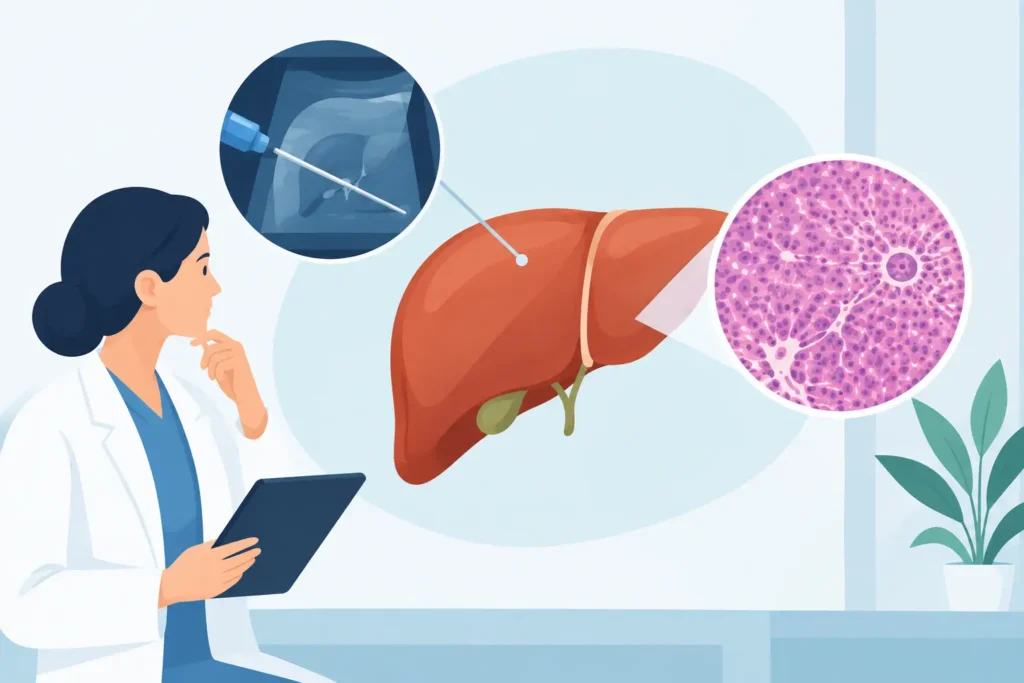
The test is not only diagnostic. During an endoscopy, a physician may take small tissue samples, called biopsies, to examine under a microscope. Biopsies can help evaluate inflammation, infection, celiac disease, and cellular changes that are not always visible during the exam. A gastroenterologist may also treat certain problems at the same time, such as controlling bleeding, widening a narrowed area of the esophagus, or removing a small growth when appropriate.
Whether endoscopy is the right next step depends on your symptoms, medical history, medications, age, and prior testing. For occasional mild reflux that responds well to treatment, immediate endoscopy may not be needed. When symptoms persist despite treatment or raise concern for complications, direct evaluation can be especially valuable.
How to Prepare for the Procedure
A clear view requires an empty stomach. Most patients are instructed not to eat or drink for a specified period before their appointment, often beginning the night before. Your care team will give you exact instructions based on your procedure time and health needs. Follow these instructions carefully, even if you feel well on the day of the exam.
Medication planning is equally important. Tell your gastroenterology team about every prescription medicine, over-the-counter medication, vitamin, and supplement you take. Blood thinners, diabetes medications, GLP-1 medications, insulin, and certain weight-loss medications may require special instructions before sedation or fasting. Do not stop prescribed medication on your own. Your physician will balance procedure safety with the reason you take each medication.
You will also need a responsible adult to take you home. Sedation can affect judgment, reflexes, and coordination for the rest of the day, so driving, operating machinery, signing important documents, and making major decisions should wait until the following day.
What to Share Before Your Appointment
Bring up any history of medication allergies, heart or lung conditions, sleep apnea, prior problems with anesthesia or sedation, pregnancy, or previous gastrointestinal surgery. These details help your physician and anesthesia team plan for your comfort and safety.
It is also helpful to describe your symptoms clearly. Note when they started, what makes them better or worse, whether they wake you at night, and whether you have noticed difficulty swallowing, appetite changes, or weight changes. A detailed history helps place the endoscopy findings in the right clinical context.
What Happens During an Upper Endoscopy Procedure
At the procedure center, you will review your medical history, consent forms, and preparation with the clinical team. An IV is typically placed so medication can be given. Many patients receive sedation or monitored anesthesia care to help them sleep comfortably through the procedure. Your gastroenterologist will discuss the sedation approach recommended for you.
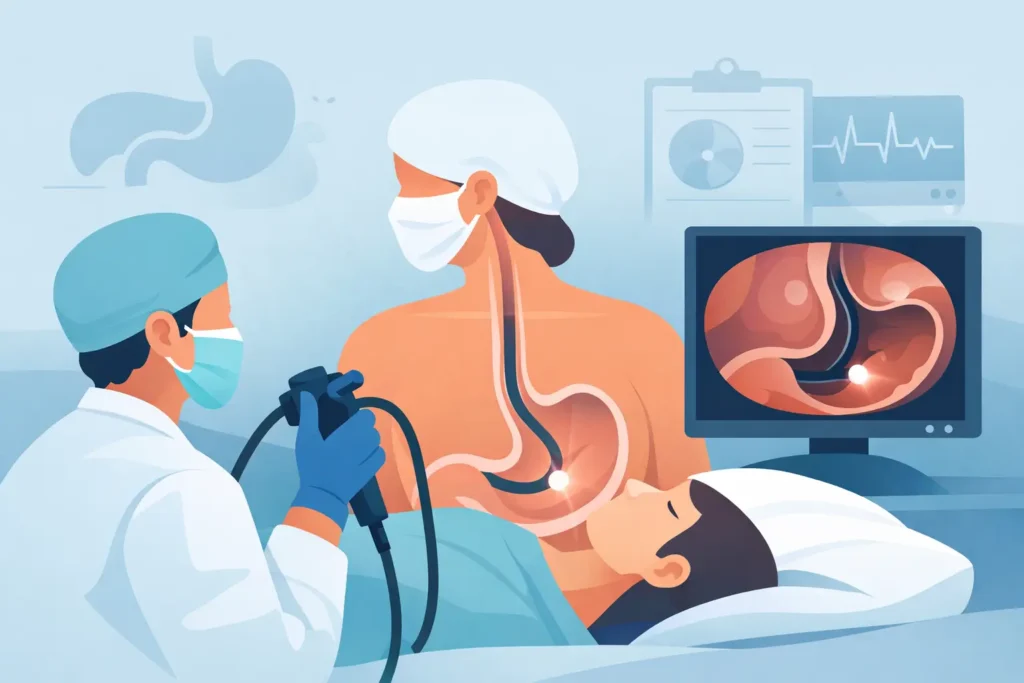
Once you are comfortable, the physician passes a thin, flexible endoscope through the mouth and into the upper digestive tract. The scope has a small camera and light that transmit detailed images to a monitor. It does not interfere with breathing, and the procedure generally takes about 15 to 30 minutes, although the total visit is longer because of check-in and recovery.
The physician carefully examines the lining of the esophagus, stomach, and duodenum. Air or carbon dioxide may be introduced to gently expand these areas for better visibility. If tissue samples are needed, they are taken through the endoscope using tiny instruments. Most patients do not feel biopsies, and removing a biopsy does not mean cancer is suspected. Biopsies are often a routine part of reaching an accurate diagnosis.
Advanced endoscopy allows physicians to document findings precisely and perform select treatments without open surgery. Still, the right approach is individualized. Some findings require medication and monitoring, while others call for additional testing, a repeat endoscopy, or referral for specialized care.
Recovery and Results
After the procedure, you will rest in a recovery area while the sedative wears off. Mild bloating, a brief sore throat, or grogginess are common and usually improve quickly. Start with the diet instructions provided by your care team. Some patients can return to regular foods that day, while others may need temporary adjustments based on the reason for the procedure or any treatment performed.
Your gastroenterologist may discuss initial visual findings with you before you leave, but sedation can make it difficult to remember every detail. Having your designated adult with you can be useful. Biopsy results take longer because a pathologist must examine the samples. Your care team will explain when to expect those results and what the next steps may be.
Call your physician promptly if you develop severe or worsening abdominal or chest pain, fever, trouble breathing, persistent vomiting, difficulty swallowing that worsens, or black or bloody stools after the procedure. Serious complications are uncommon, but these symptoms should be evaluated without delay.
Understanding the Benefits and Risks
Upper endoscopy is generally safe when performed by trained specialists in an appropriate clinical setting. Its central benefit is precision: it can identify inflammation, narrowing, ulcers, bleeding, and abnormal tissue directly, while allowing biopsies or treatment during the same exam.
As with any medical procedure, there are risks. These can include a reaction to sedation, bleeding, infection, or a tear in the digestive tract. The likelihood varies based on your health, the reason for the procedure, and whether an intervention is performed. Your gastroenterologist will review the risks relevant to you and answer questions before you consent.
For many patients, the greater risk is allowing significant symptoms or chronic reflux to continue without evaluation. Ongoing inflammation can affect quality of life and, in some cases, lead to complications that are easier to manage when found early.
Care That Connects Symptoms to a Plan
An endoscopy result is most useful when it leads to a thoughtful next step. That may mean refining reflux treatment, addressing a swallowing disorder, managing an ulcer, monitoring Barrett’s esophagus, or evaluating whether liver, metabolic, medication, or weight-related factors may be contributing to digestive symptoms.
At NJ Gastroenterology & Health Wellness, board-certified gastroenterology care is designed around that full picture – your symptoms, history, test results, lifestyle, and long-term health goals. If an upper endoscopy has been recommended, asking why it is needed, how to prepare, and what the results could change is a practical first step toward care that feels informed and personal.